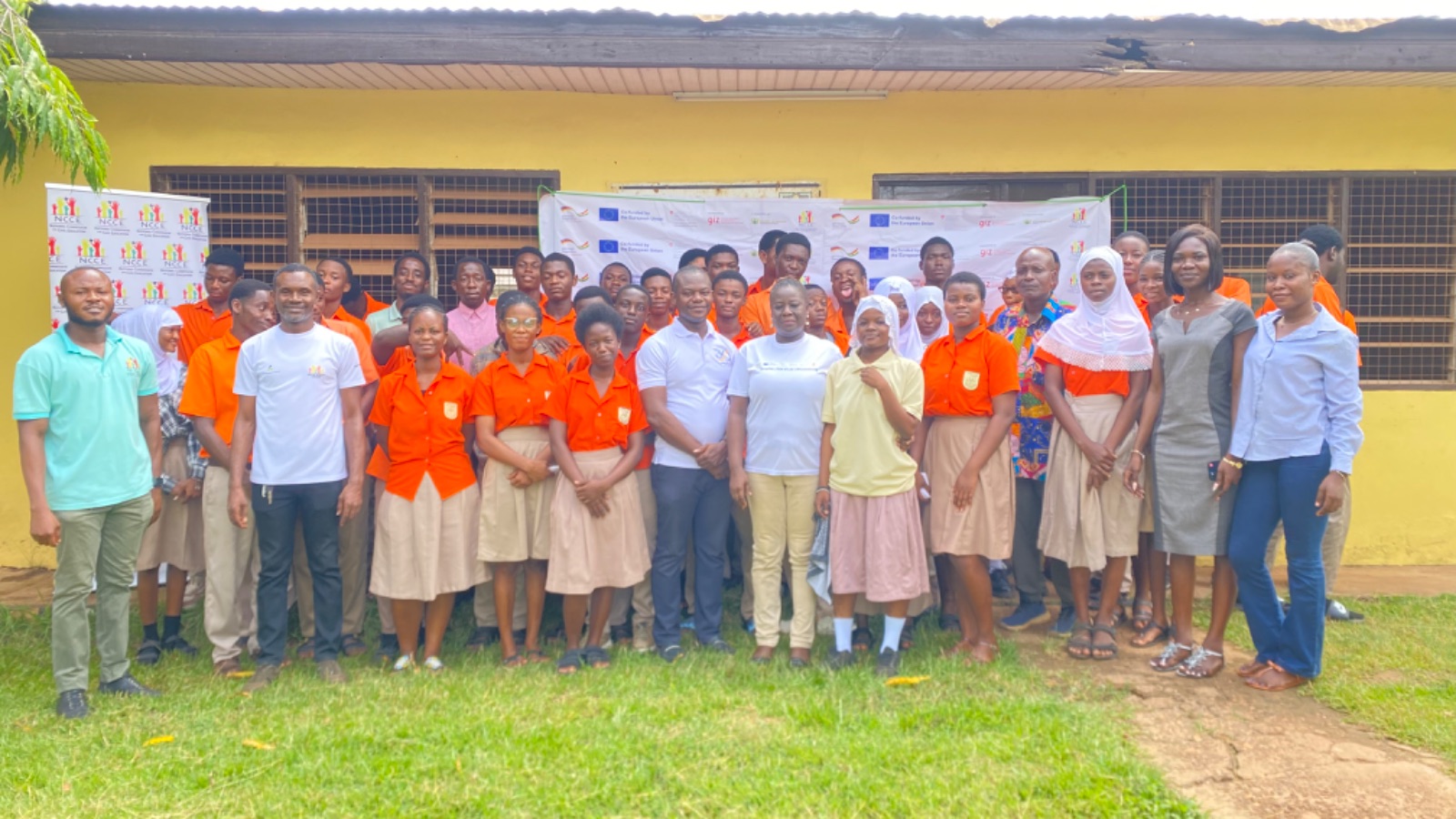
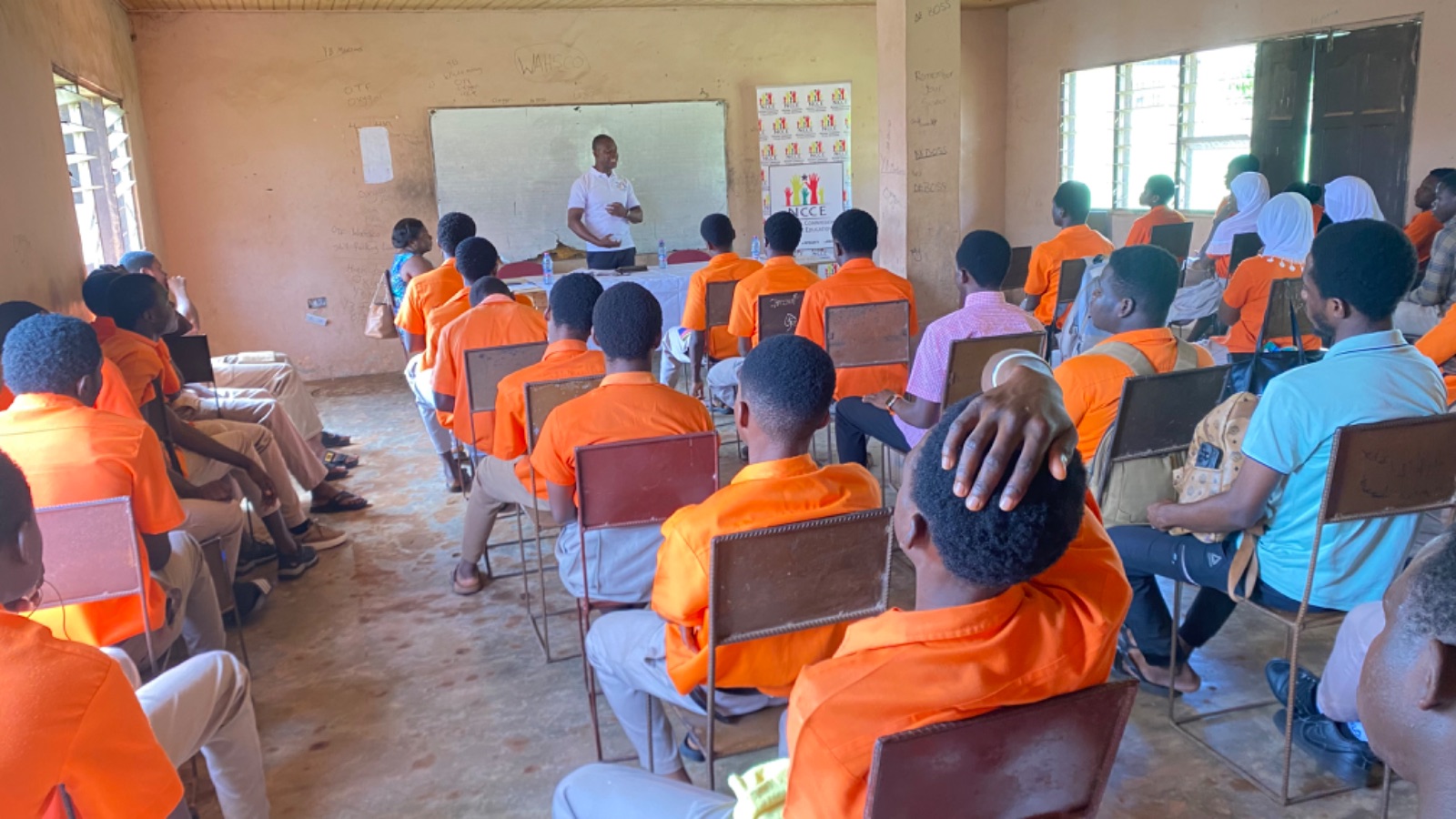
The Adentan Municipal Office of the National Commission for Civic Education (NCCE), in partnership with Deutsche Gesellschaft für Internationale Zusammenarbeit (GIZ) GmbH, the European Union (EU), and the Ministry of Finance (MoF), has engaged students of Unity International Senior High School, Faraha, on the theme: “The Rule of Law and the Fight Against Corruption.”
The anti-corruption awareness session was held on Thursday, 7th May 2026, at the premises of Unity International SHS. Mr. Alex O. Siaw served as the Master of Ceremonies for the program and, in his opening remarks, welcomed participants and outlined the purpose of the engagement.
Addressing the students, Mrs. Sylvia Osei-Bonsu, Municipal Director of the NCCE in Adentan, explained the Commission’s mandate and highlighted the importance of civic responsibility among young people. She stated that the NCCE carries out its activities through both school-based and community-based programs. According to her, school engagements are organized either through general assembly's involving the entire student body or through interactions with Civic Education Clubs (CEC).
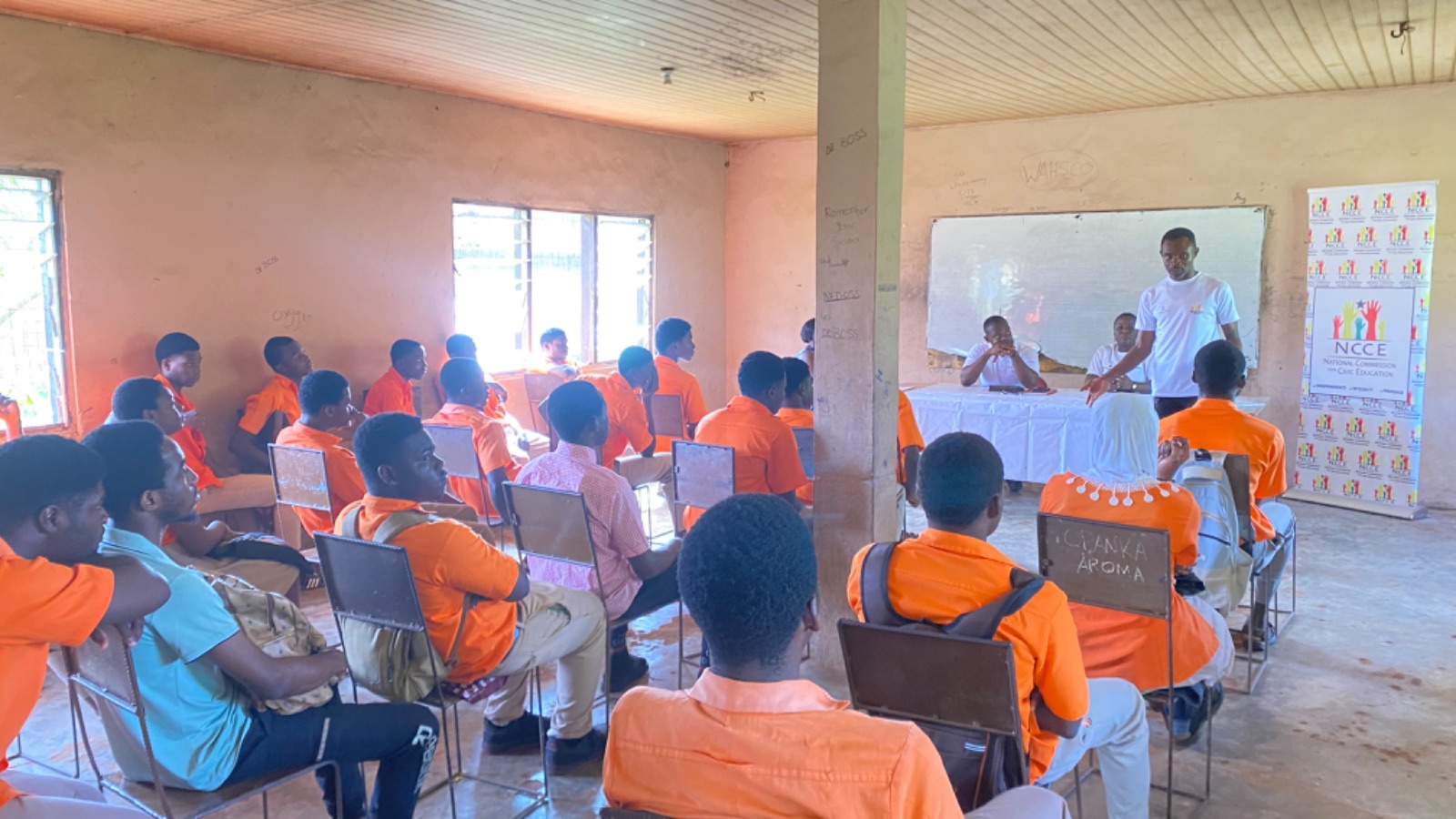
The resource person for the program, Mr. Godfred Ebo Arhin, Public Education Focal Person from the Greater Accra Regional Office of the Commission on Human Rights and Administrative Justice (CHRAJ), educated students on the theme, “The Rule of Law and the Fight Against Corruption.” He emphasized the growing concern of corruption and the fear many people have of speaking against it.
Mr. Arhin outlined the causes, forms, and consequences of corruption, and explained practical measures citizens can adopt to help combat the menace. He defined corruption as “the misuse of public office for private gain,” and illustrated the concept using the example of a class prefect who abuses authority for personal benefit instead of serving the collective interest.
He further explained that although corruption may stem from individual behavior, broader social and institutional factors also contribute significantly to the problem. He identified fraud, bribery, examination malpractice, and extortion as common practices that fuel corruption in society.
Using a simple analogy, Mr. Arhin explained bribery by comparing it to a pen drive infected by a virus, noting that just as a virus corrupts a pen drive, dishonest acts corrupt individuals. He also stated that the misuse of public time and resources, obtaining valuables under false pretenses, and using positions for personal benefit all constitute acts of corruption.
Concluding the session, Mr. Arhin stressed that public accountability remains one of the strongest mechanisms for curbing corruption. When students were asked how they could contribute to the fight against corruption, they suggested reporting wrongdoing to appropriate institutions such as the Police, the Assemblyman, the Economic and Organized Crime Office (EOCO), the Office of the Special Prosecutor, and CHRAJ.
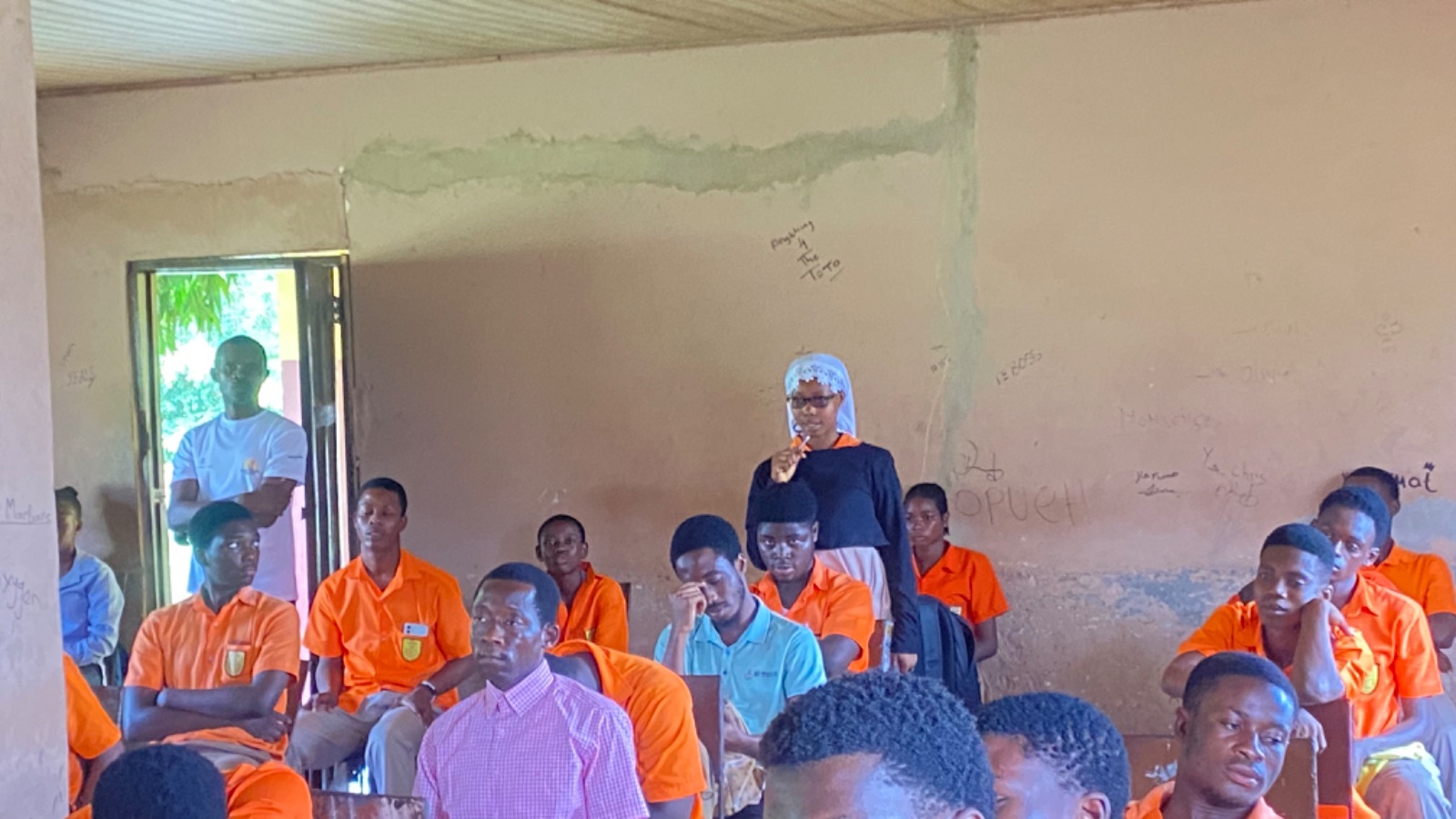
Students were also given the opportunity to ask questions and interact with the facilitators. They further appealed to the NCCE and its partners to intensify public education campaigns to promote integrity and strengthen the fight against corruption.
The session formed part of the NCCE’s ongoing efforts to educate young people on integrity, civic responsibility, and the importance of combating corruption in society.
_
Follow us on our social media pages for more stories and posts from the NCCE.

https://www.instagram.com/nccegh/

https://www.facebook.com/nccegh/
Leave a comment