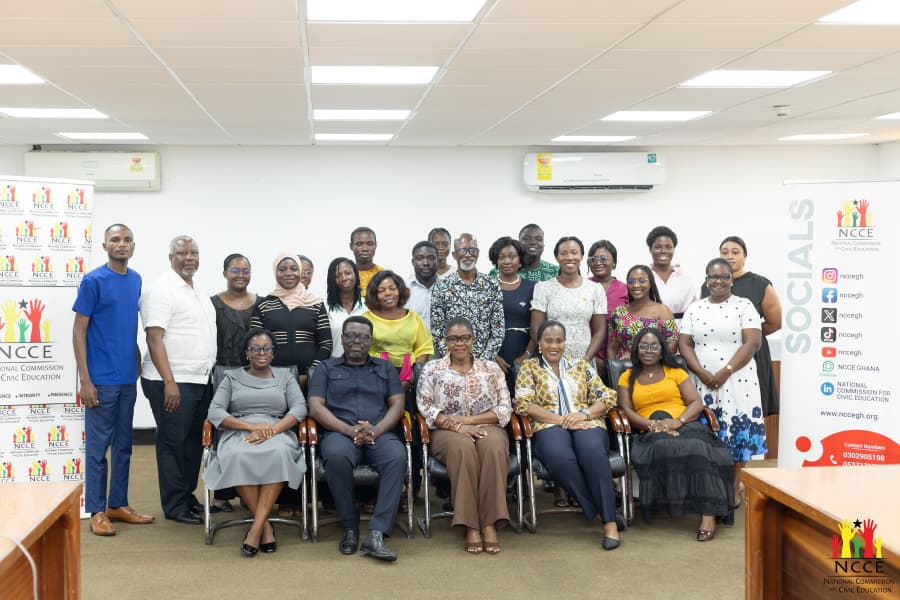
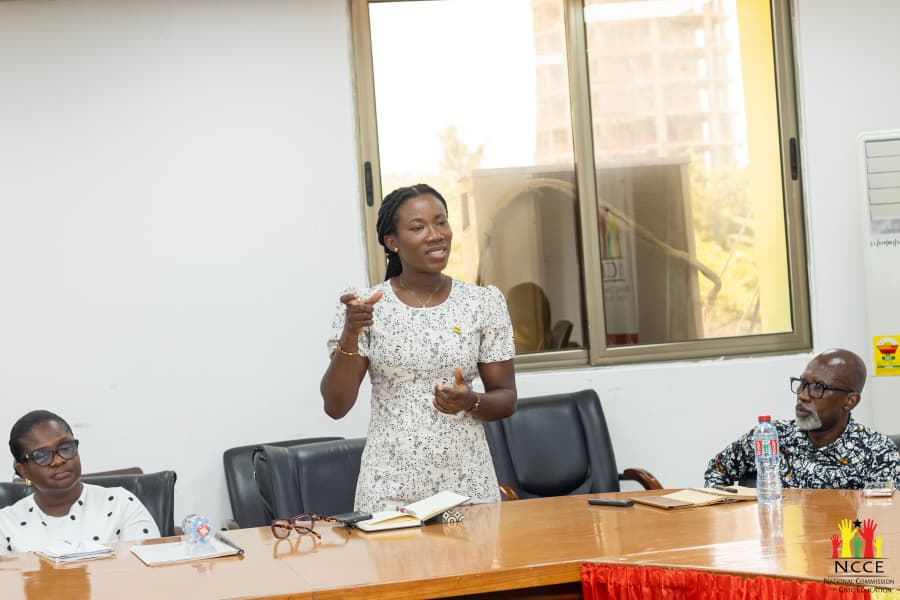
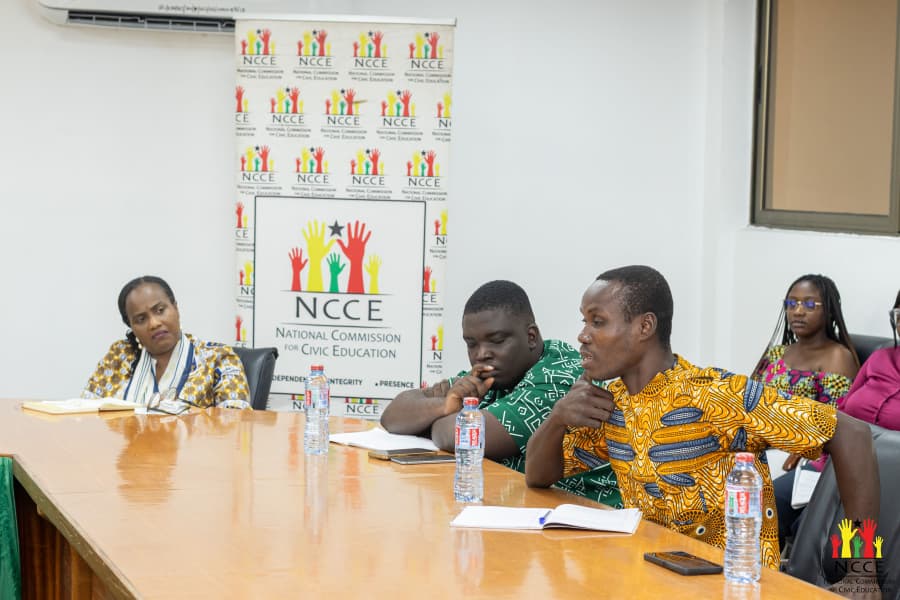
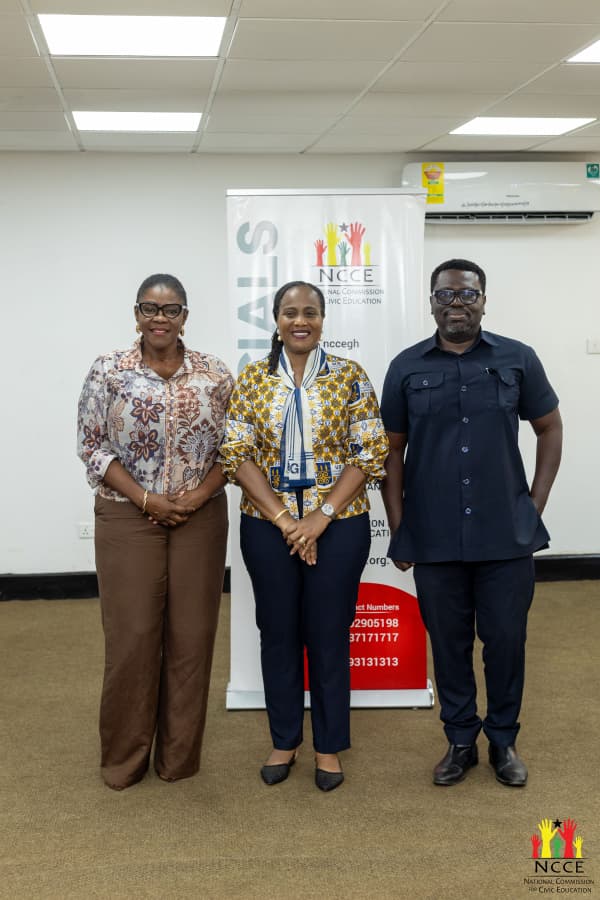
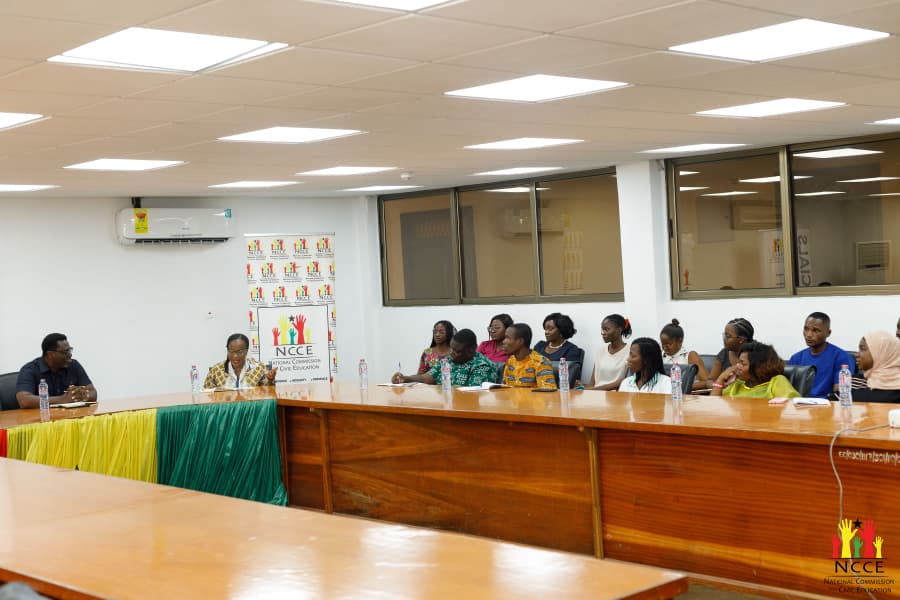
Led by Dr. Antoinette Tsiboe-Darko, a lecturer in Social and Public Policy at the University of Ghana, Legon, the students visited the Commission as part of efforts to bridge academic learning with practical experiences in public policy and democratic governance. The engagement offered them an opportunity to interact with officials of the NCCE and gain insight into the Commission’s mandate and interventions aimed at promoting peace, civic responsibility and democratic participation.
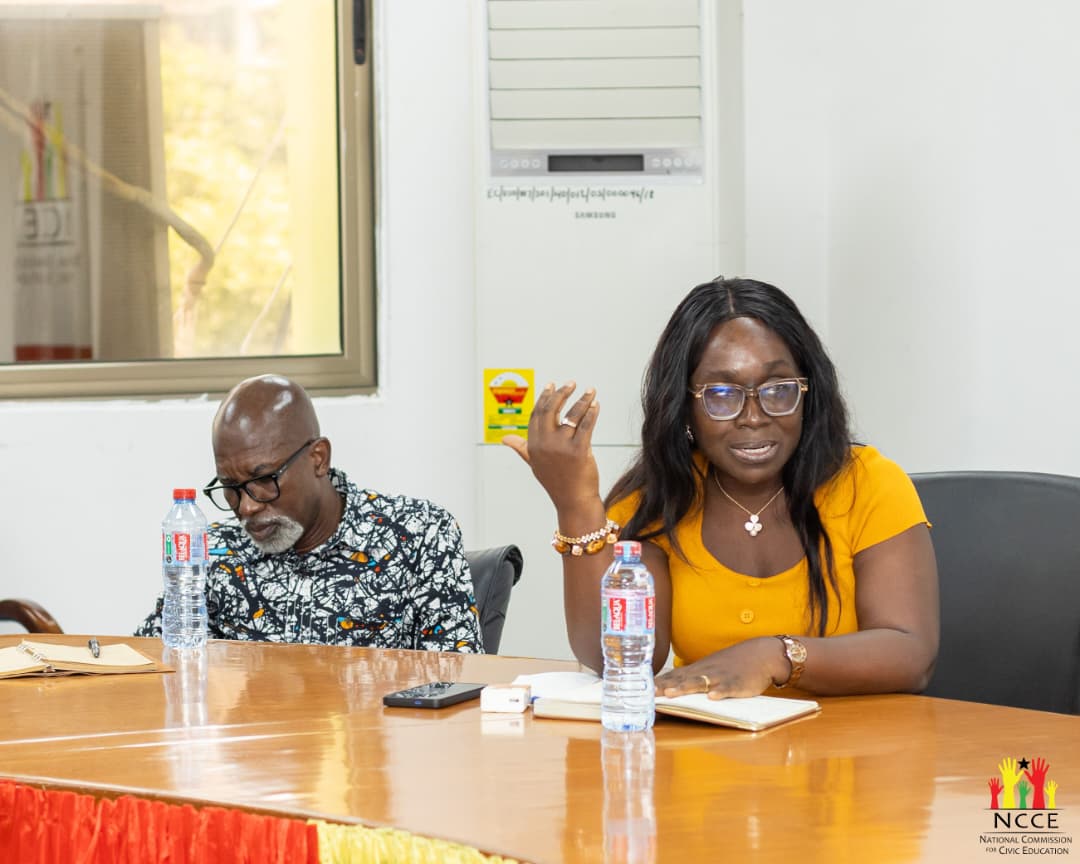
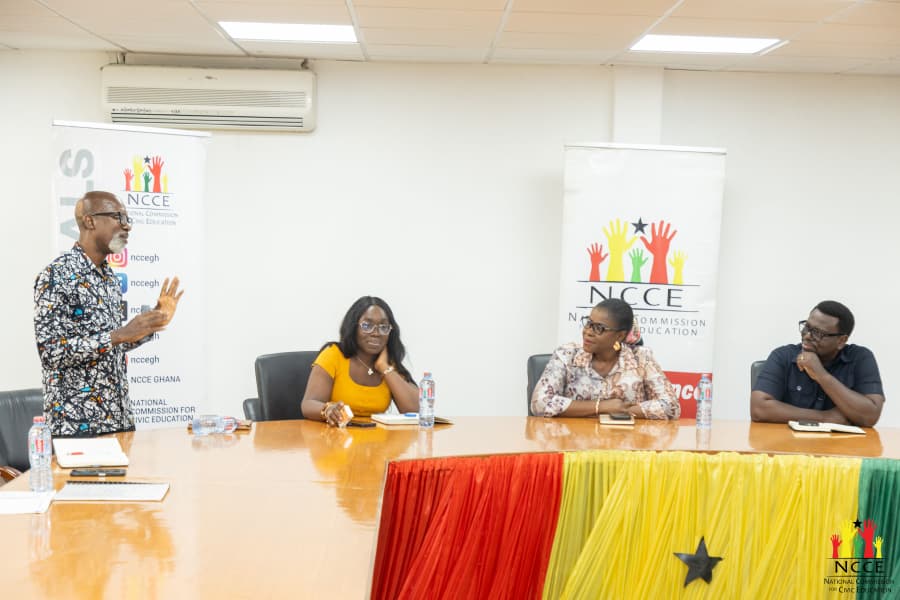
Central to the visit was a presentation by the Director of Programmes at the NCCE, Dr. Mohammed Imurana, who took the students through the Commission’s mechanisms for preventing and managing election-related violence. His presentation highlighted the NCCE’s work in civic education, advocacy, stakeholder engagement, conflict prevention and dialogue as important components of efforts to promote peaceful and credible electoral processes.
Dr. Imurana explained that preventing electoral violence requires early identification of potential sources of tension, sustained engagement with relevant actors and timely interventions before disagreements escalate. He also outlined how the Commission works with communities, institutions and other stakeholders to encourage tolerance, peaceful participation and respect for democratic principles before, during and after elections.
Students actively participated in the session, raising questions about Ghana’s experience with election-related tensions and the progress made by the Commission in addressing such challenges. Their discussions explored the mechanisms adopted by the NCCE to prevent and manage electoral conflicts, as well as the effectiveness of civic education and advocacy in shaping citizens’ attitudes and encouraging peaceful political participation.
Attention was also given to the Commission’s collaboration with other state and non-state actors in promoting peaceful elections and strengthening public understanding of democratic rights and responsibilities. Participants discussed the importance of building partnerships that enable institutions to respond effectively to emerging tensions while encouraging dialogue and responsible civic behaviour.
Beyond electoral conflict management, the interaction enabled the students to appreciate the broader role of civic education in promoting social cohesion and strengthening democratic governance. It further demonstrated how community engagement, public education and advocacy can contribute to addressing tensions and improving citizens’ participation in national and local democratic processes.
For the visiting students, the engagement provided a practical dimension to their studies in social and public policy by connecting classroom concepts with institutional approaches to conflict prevention, peacebuilding and civic education. The visit also reinforced the value of collaboration between academic and public institutions in generating knowledge, sharing practical experiences and strengthening approaches to conflict management and peaceful democratic participation in Ghana.
 _
_
Follow us on our social media pages for more stories and posts from the NCCE.

https://www.instagram.com/nccegh/

https://www.facebook.com/nccegh/
https://www.youtube.com/channel/UCwajFJmmlmzRf1OMM.
Leave a comment