The National Commission for Civic Education (NCCE), in partnership with the United Nations Population Fund (UNFPA) and with financial support from Global Affairs Canada, has engaged community members of Somanya on adolescent health, gender equality, and the prevention of Gender-Based Violence (GBV).
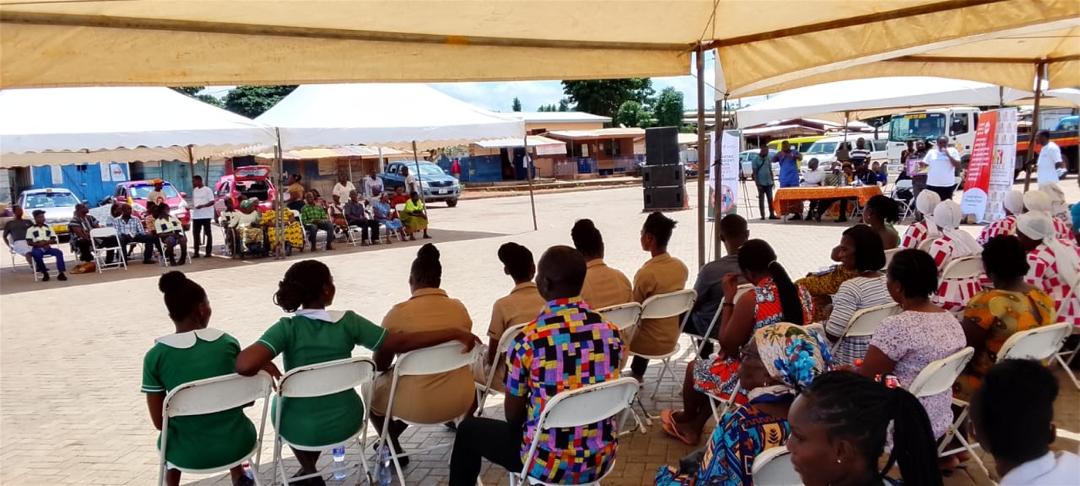
The sensitization programme was held at the Akutunya Lorry Park in Somanya on Friday, 26th June 2026. It brought together residents and key stakeholders to discuss practical ways of protecting adolescents, preventing abuse, and building safer communities.
Resource persons were drawn from the Commission on Human Rights and Administrative Justice (CHRAJ), Ghana Health Service (GHS), Ghana Police Service (GPS), Department of Social Welfare, and the NCCE. The engagement focused on community responsibility in promoting adolescent well-being, preventing GBV, and supporting vulnerable persons.
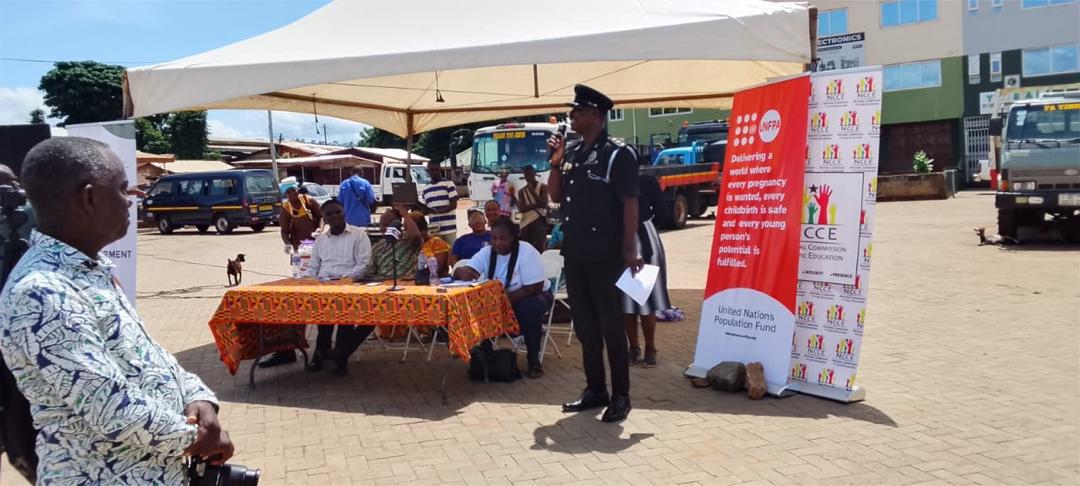
Addressing participants, ASP George Akomeah of the Ghana Police Service explained how the law protects adolescents from abuse and exploitation. He noted that many cases involving young people are linked to peer-to-peer sexual relationships, making prevention and intervention more complex. He urged parents and community members to give equal attention to the upbringing, protection, and guidance of both boys and girls.
Madam Elizabeth Mensah of the Department of Social Welfare demonstrated how families, institutions, and communities must work together to protect adolescents. She emphasized that the welfare of young people is a shared responsibility and not the duty of one institution alone.
The CHRAJ Director, Mr. Alfred Akuffo Larbi, spoke on domestic violence and its harmful effects on adolescents. He encouraged men to take active roles in child upbringing and help create peaceful homes that support the growth and safety of children.
Mrs. Diana Agboka of the Ghana Health Service urged participants to seek accurate health information from qualified professionals. She emphasized that a planned family supports a better future and noted that the health of women is central to the well-being of families and society.
Madam Henrietta Glikpo of the NCCE educated participants on the various forms of GBV, including physical, emotional, sexual, and psychological abuse. She noted that violence occurs in homes, schools, workplaces, and communities, leaving lasting effects on victims.
She stressed that silence is not an option and encouraged community members to speak out, report abuse, support survivors, and condemn all forms of violence. She also called for adolescents to be involved in decisions that affect their lives.
Participants expressed appreciation to NCCE, UNFPA, and Global Affairs Canada for the education. The programme ended with a call on families, institutions, traditional leaders, religious leaders, and community members to work together to promote adolescent health, gender equality, and safer communities.
_
Follow us on our social media pages for more stories and posts from the NCCE.

https://www.instagram.com/nccegh/

https://www.facebook.com/nccegh/
Leave a comment