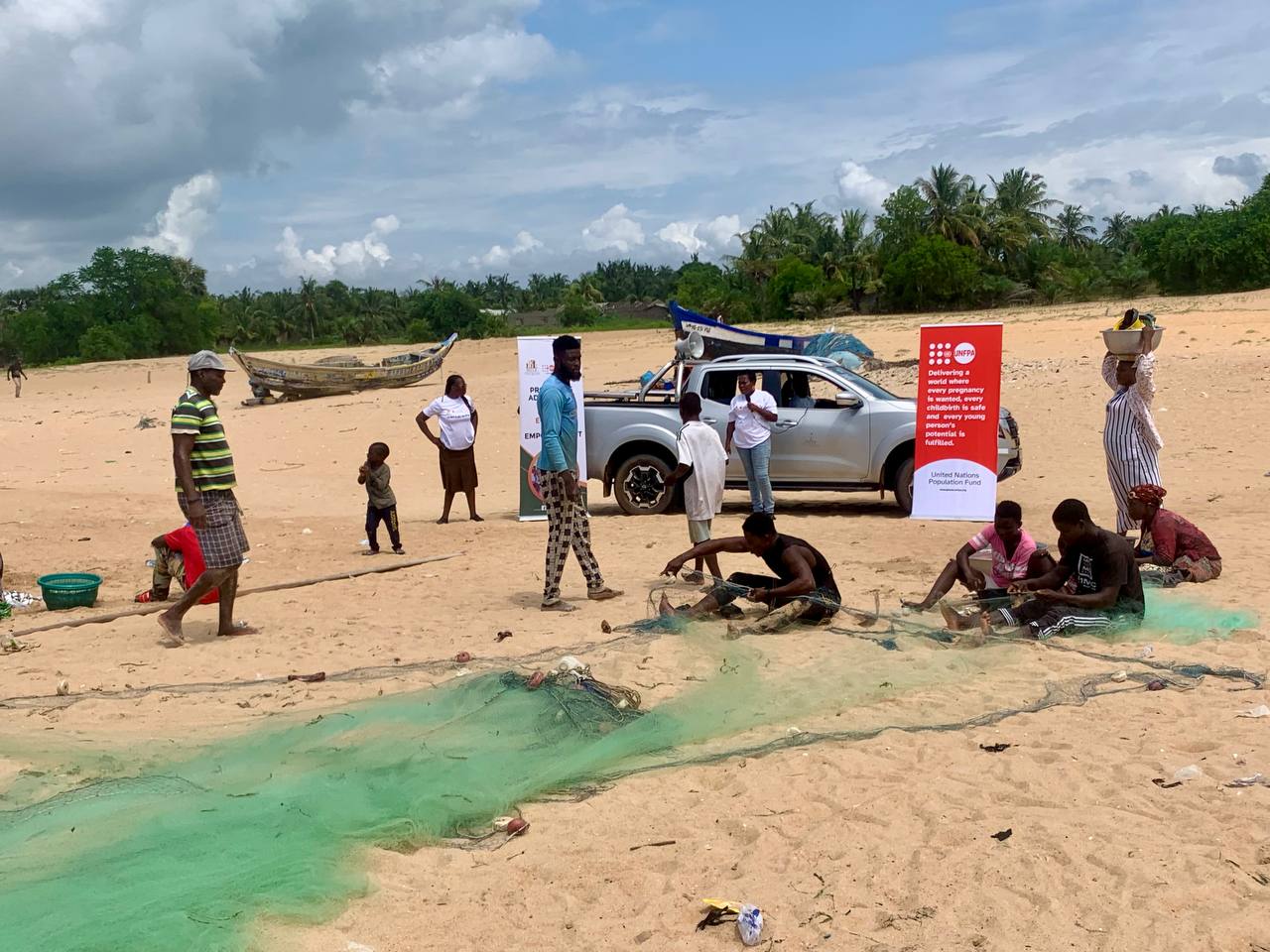
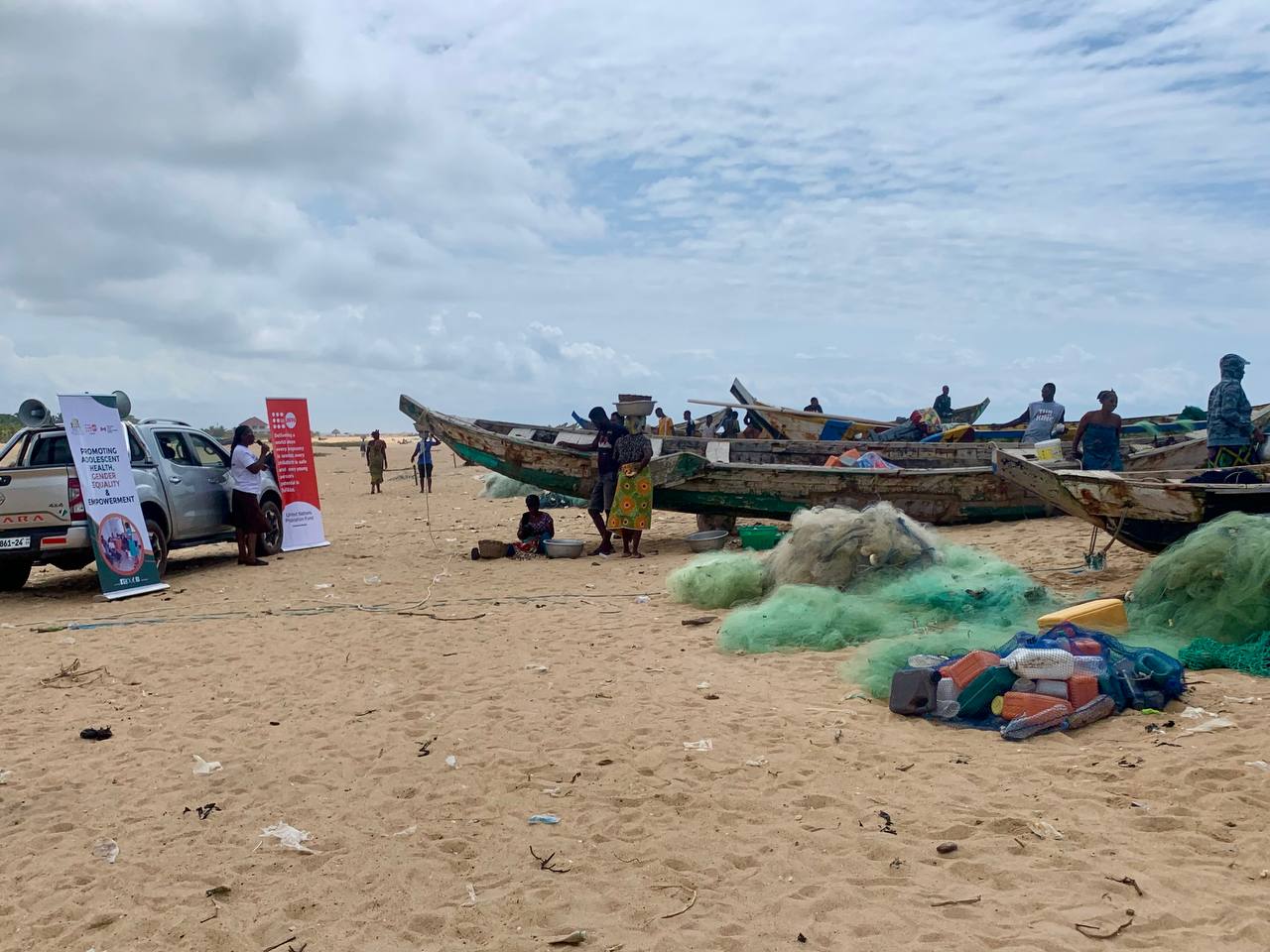
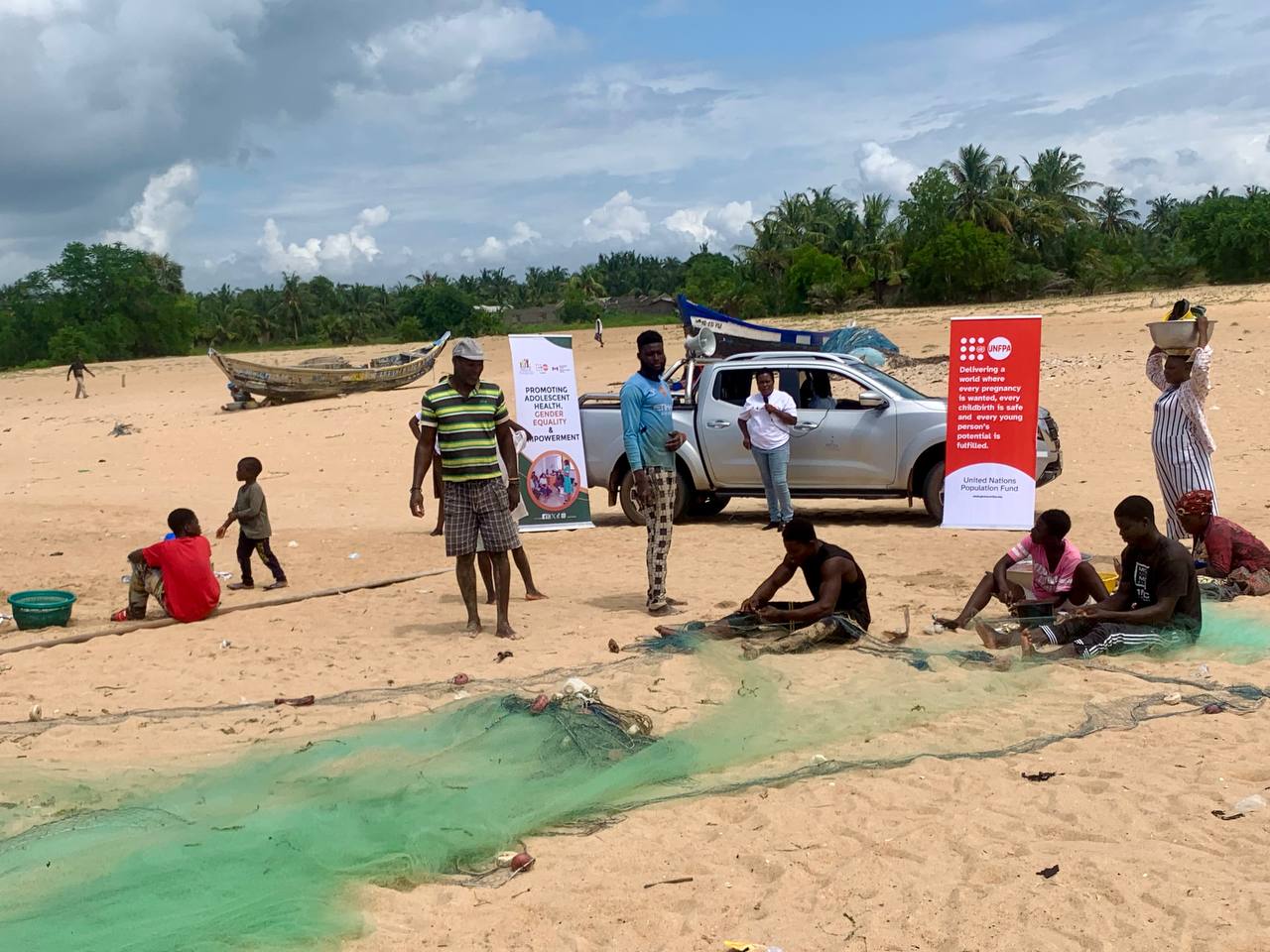
The National Commission for Civic Education (NCCE) in the Keta Municipality took civic education directly to the grassroots by engaging residents of the fishing communities of Tetevikope and Tetekope through a mobile-van public education campaign.
The outreach, which was conducted using a mobile public address system, formed part of a broader project titled “Empowering Community and Youth for Adolescent Health, Gender Equality, and Preventing Gender-Based Violence through Civic Engagement.” The initiative is being implemented by NCCE in partnership with the United Nations Population Fund (UNFPA), with financial support from Global Affairs Canada.
Specifically, the campaign targeted fisher folks, fish processors, youth, parents, and other community members. It focused on key social issues such as Gender-Based Violence (GBV), adolescent pregnancy, harmful social norms, and challenges relating to Sexual and Reproductive Health and Rights (SRHR).
Leading the engagement was the Municipal Director of NCCE, Mad. Lina Bensah, and the Assistant Civic Education Officer (ACEO), Mad. Agartha Fiakofi. Together, they educated residents on the need to promote positive behavioural change, particularly in relation to adolescent health and gender equality.
In addition, the officers emphasized the importance of involving boys and men as active partners in preventing violence and promoting respectful relationships. They explained that addressing GBV requires collective responsibility and sustained community action.
Furthermore, residents were urged to reject all forms of abuse and discrimination. The NCCE officials stressed that gender-based violence remains a serious challenge that negatively affects individuals, families, and entire communities. As a result, community members were encouraged to promote human rights, dignity, and equality in their daily interactions.
Moreover, attention was drawn to the need to create safe and supportive environments for adolescents, especially girls, to enable them to reach their full potential. Parents and guardians were also encouraged to prioritize the health, education, and overall well-being of young people.
The campaign additionally reminded residents that reporting cases of abuse and speaking out against violence can help protect vulnerable individuals and prevent future harm. Consequently, community members were encouraged to work collectively in safeguarding the rights of adolescents.
The mobile van engagement attracted strong participation, with many residents listening attentively and contributing to discussions. This demonstrated growing community interest in addressing social issues affecting adolescent health and development.
In conclusion, the outreach reflects NCCE’s continued commitment to civic education and community engagement aimed at building safer, healthier, and more inclusive societies where young people can thrive free from violence and discrimination
_
Follow us on our social media pages for more stories and posts from the NCCE.

https://www.instagram.com/nccegh/

https://www.facebook.com/nccegh/
Leave a comment