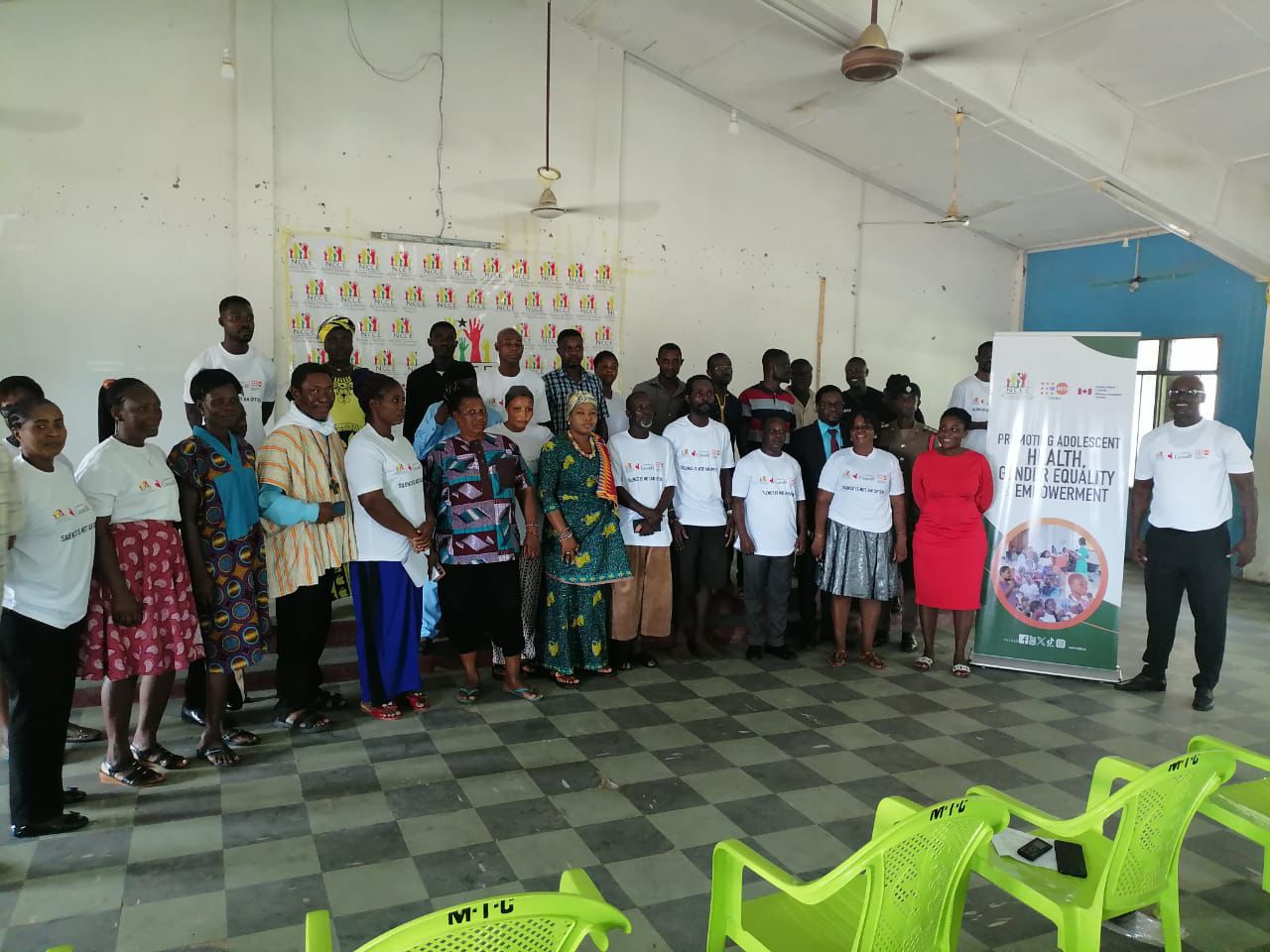
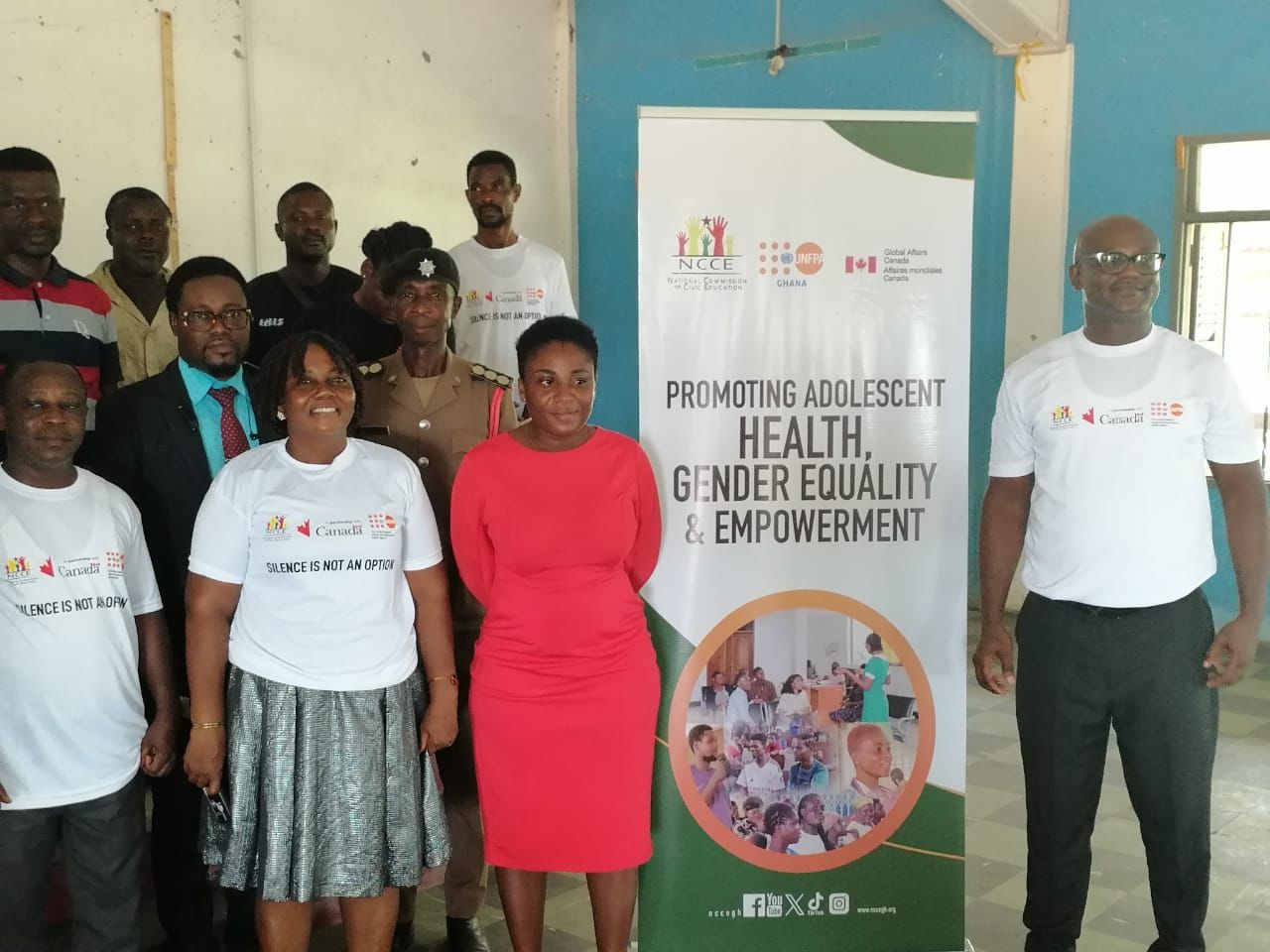
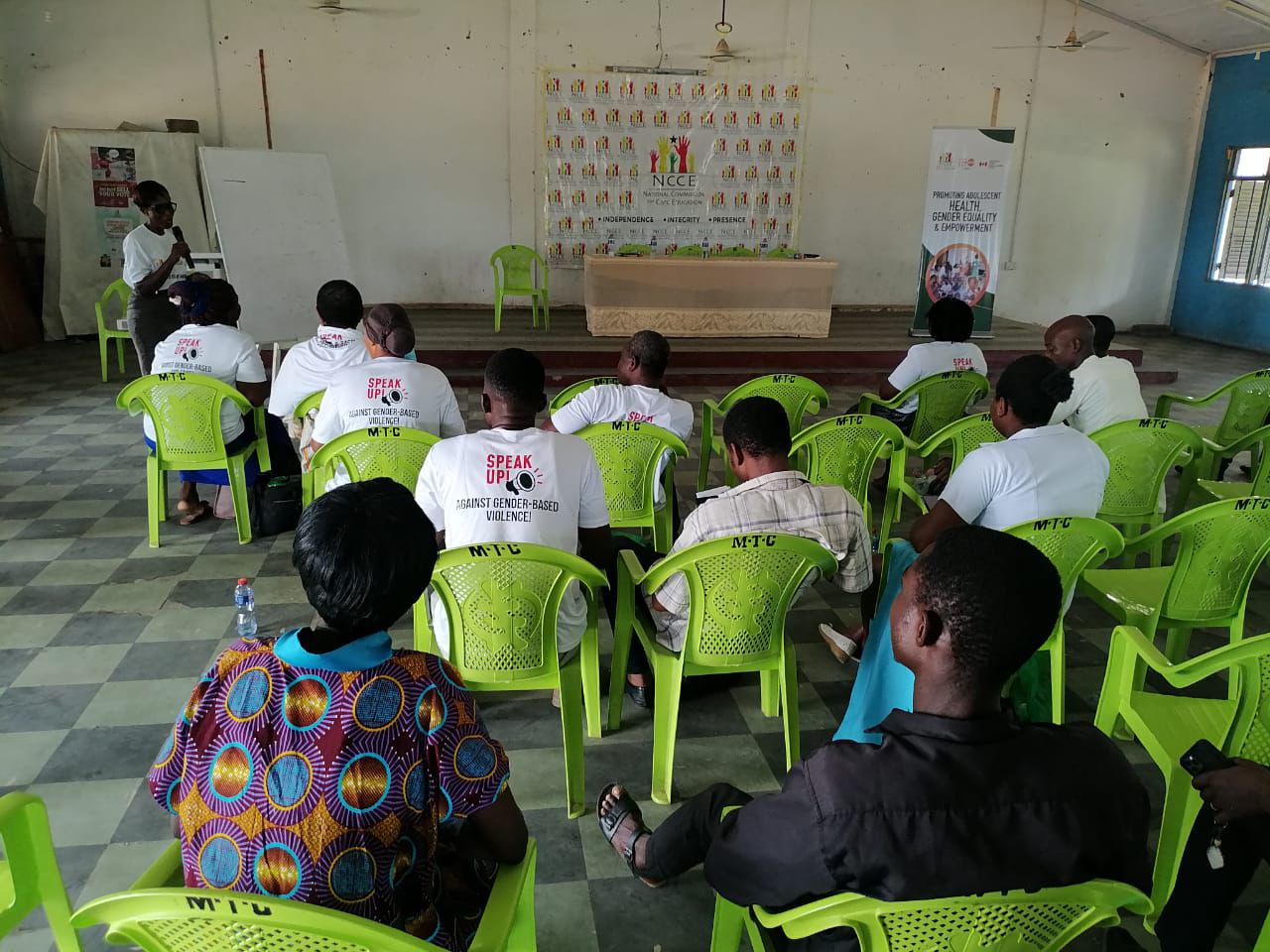
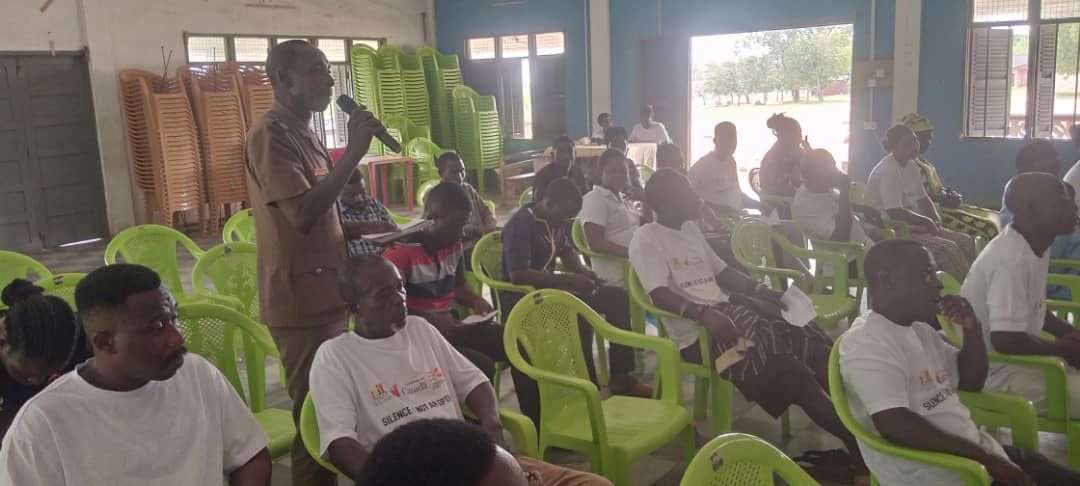
The National Commission for Civic Education (NCCE) in the Central Tongu District, with support from the United Nations Population Fund (UNFPA), has held a high-level stakeholder engagement aimed at strengthening community-led responses to adolescent health challenges, promoting gender equality, and preventing gender-based violence (GBV).
Addressing participants, Mr. George A. K. Amey, District Director of the NCCE, noted that adolescent girls continue to face multiple vulnerabilities, including limited access to credible reproductive health information, entrenched social norms, and increased exposure to early pregnancy, unsafe sexual practices, and violence. He emphasized that these issues have become both developmental and public health priorities requiring urgent, coordinated action across all sectors.
Mr. Amey stressed that providing adolescent girls with accurate information, protection, and opportunities is essential to building resilient families and progressive communities. He commended UNFPA for its sustained partnership, highlighting that its focus on reproductive health, adolescent empowerment, and eliminating harmful practices aligns closely with the district’s development agenda. He further noted that the community engagements would be replicated across the district to ensure wider impact.
Referencing national data, which show that one in three women in Ghana experiences physical violence in her lifetime, Mr. Amey called for renewed community commitment to prevention, accountability, and inclusive participation. He underscored the importance of involving men and boys as key allies in dismantling harmful gender norms and promoting shared responsibility for sexual and reproductive health.
Speaking at the event, Mr. Godsway Adabah, the District Adolescent Health Focal Person, highlighted the need for sustained adolescent education, early guidance, and accessible youth-friendly services. He emphasized that positive role modelling, coordinated community involvement, and responsible peer networks remain crucial in reducing health risks among young people.
Madam Cynthia Mensah from the Commission on Human Rights and Administrative Justice (CHRAJ) facilitated discussions on Gender Equality and GBV. She described GBV as a persistent human rights violation that compromises the dignity and security of women and girls. She called for stronger institutional collaboration, improved reporting systems, and increased community advocacy against all forms of discrimination and abuse.
The engagement brought together traditional authorities, development partners, district institutions, civil society groups, and youth organizations. All participants reaffirmed their commitment to promoting adolescent well-being, strengthening protective structures, and advancing gender-responsive policies across the Central Tongu District.
The programme was organised by the NCCE in partnership with UNFPA and funding from Global Affairs Canada under the Empowering Adolescents Girls programme.
_
Follow us on our social media pages for more stories and posts from the NCCE.

https://www.instagram.com/nccegh/

https://www.facebook.com/nccegh/
Leave a comment