A lesson in integrity took centre stage at Bongo Senior High School when students were challenged to reject corruption, uphold the rule of law, and practise ethical leadership in their daily lives.
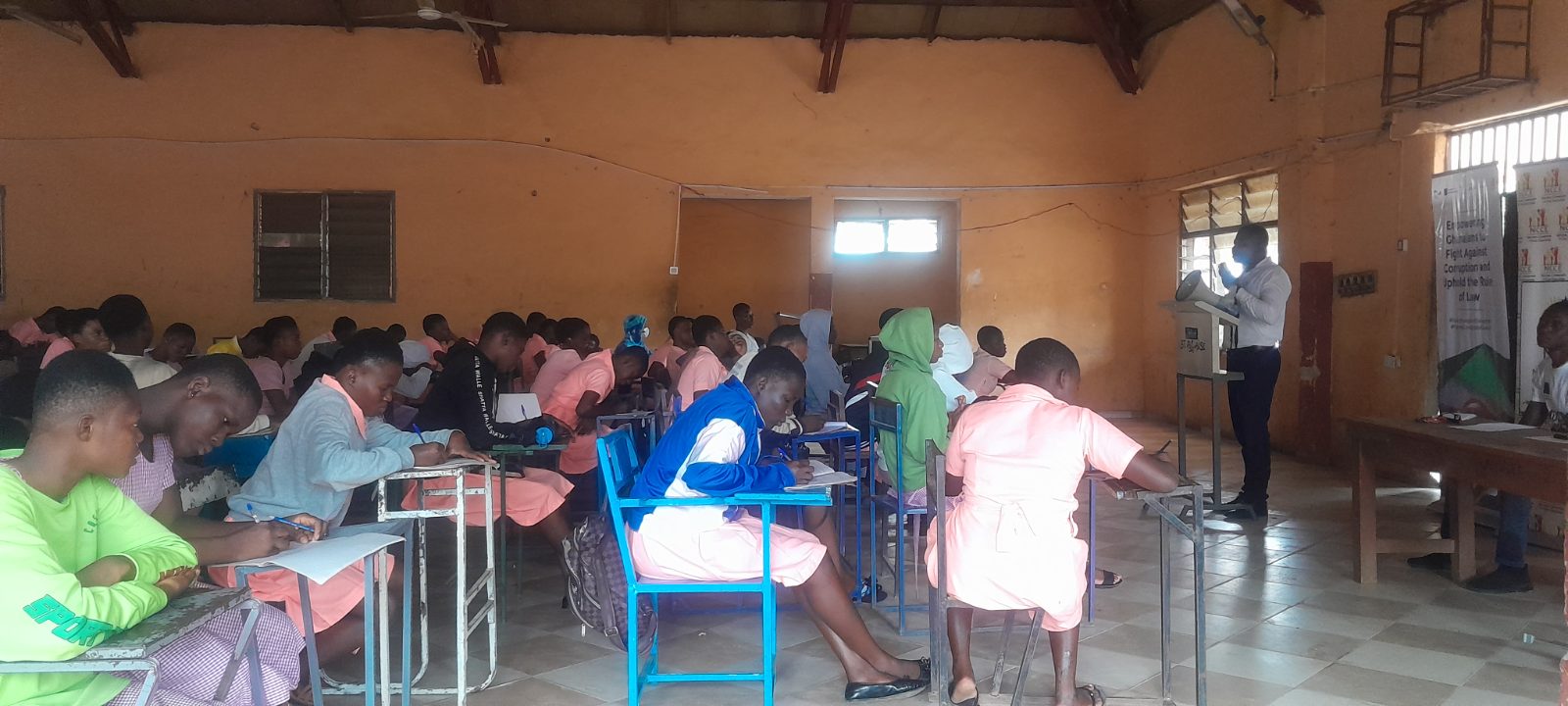
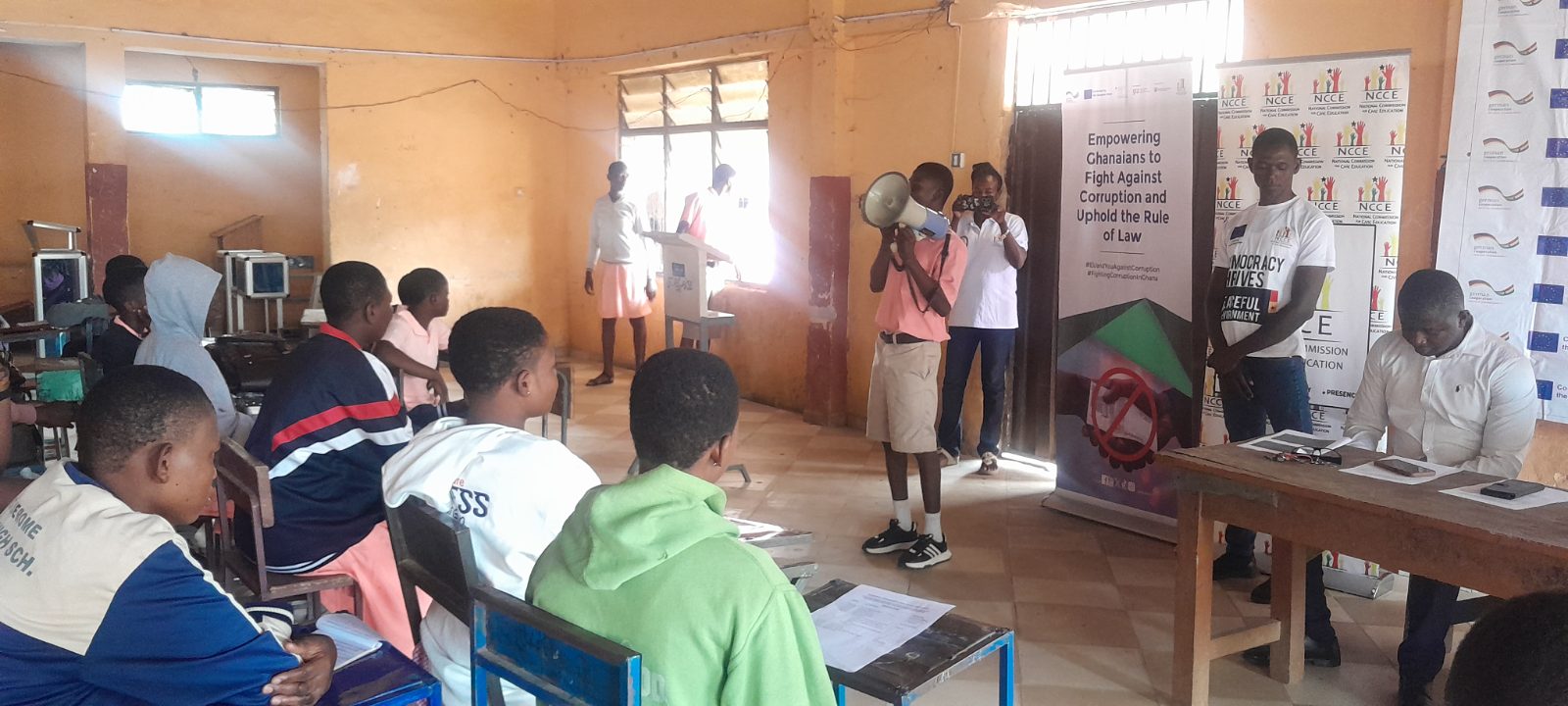
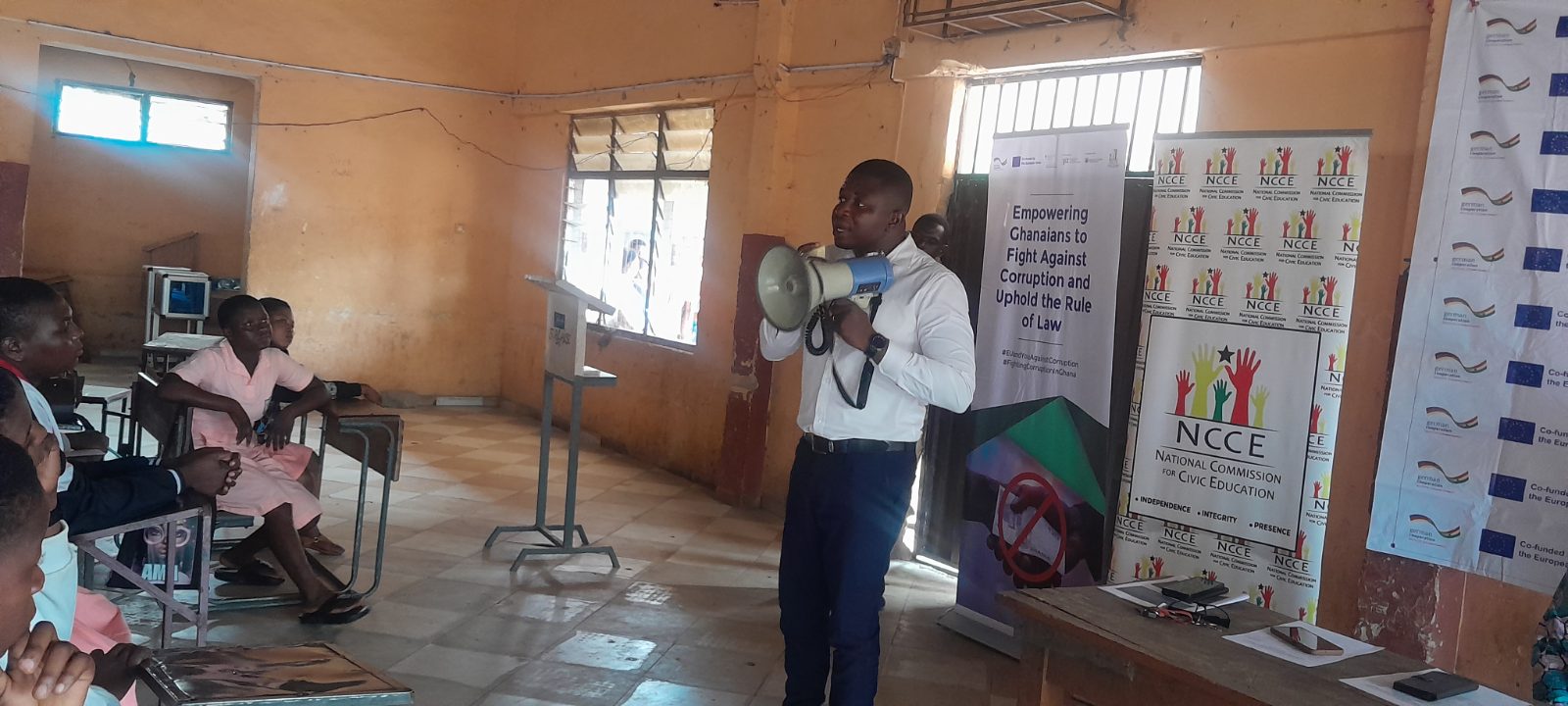
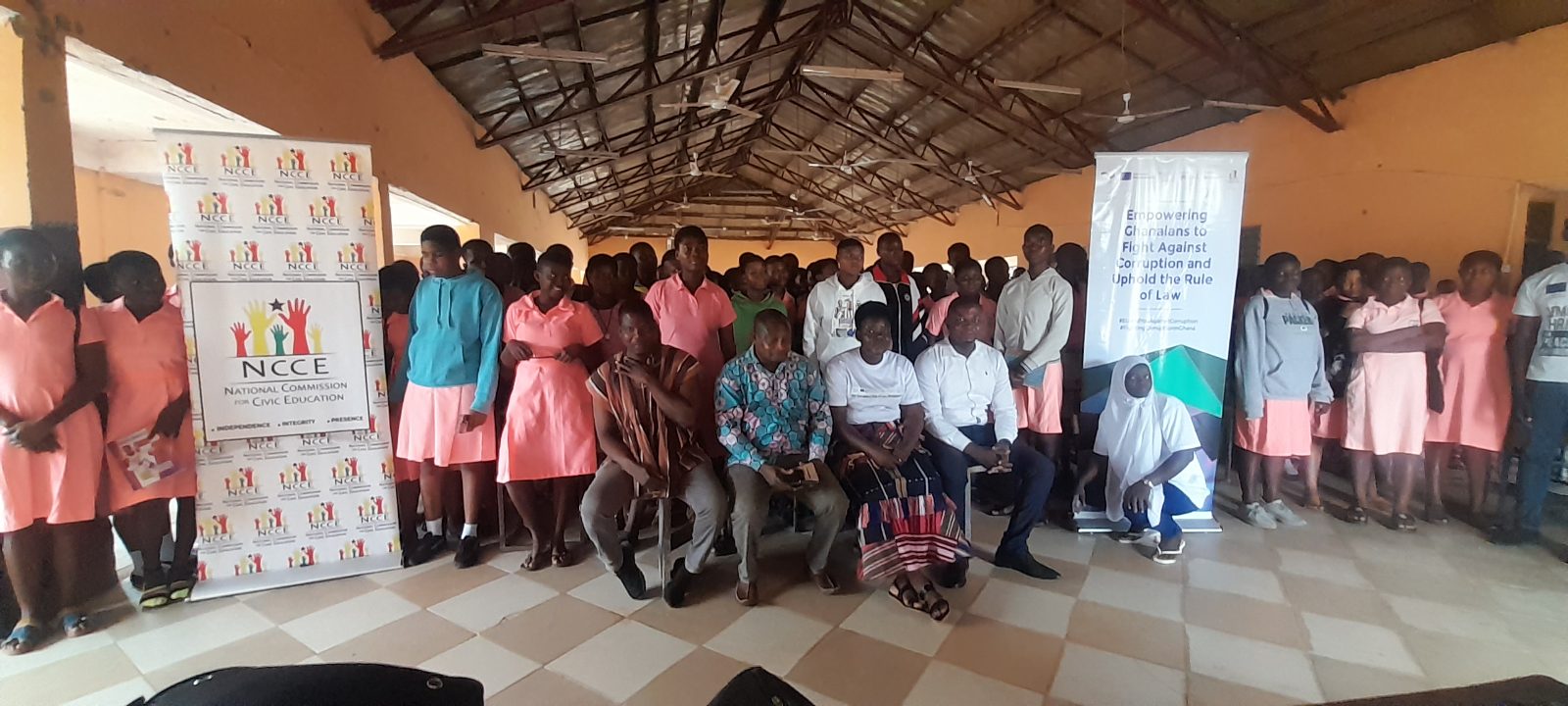
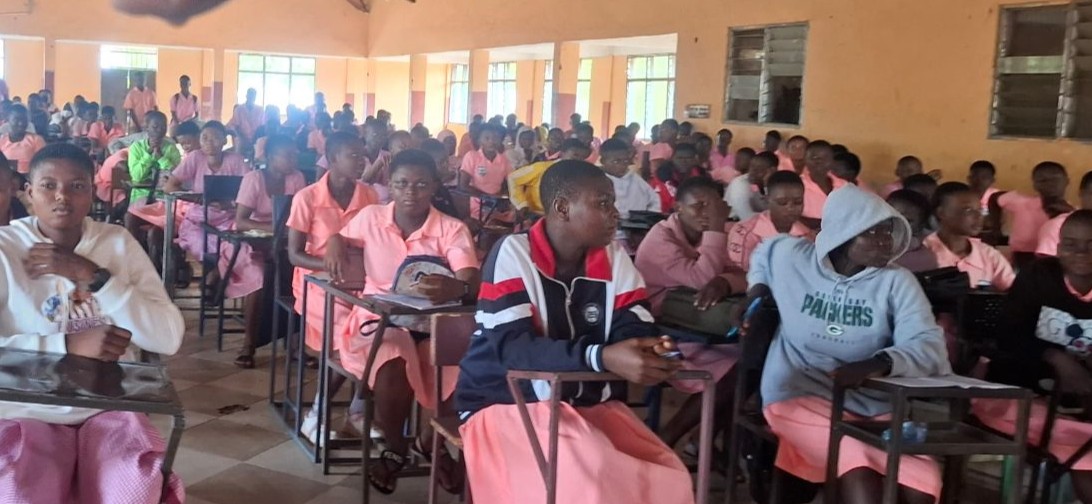
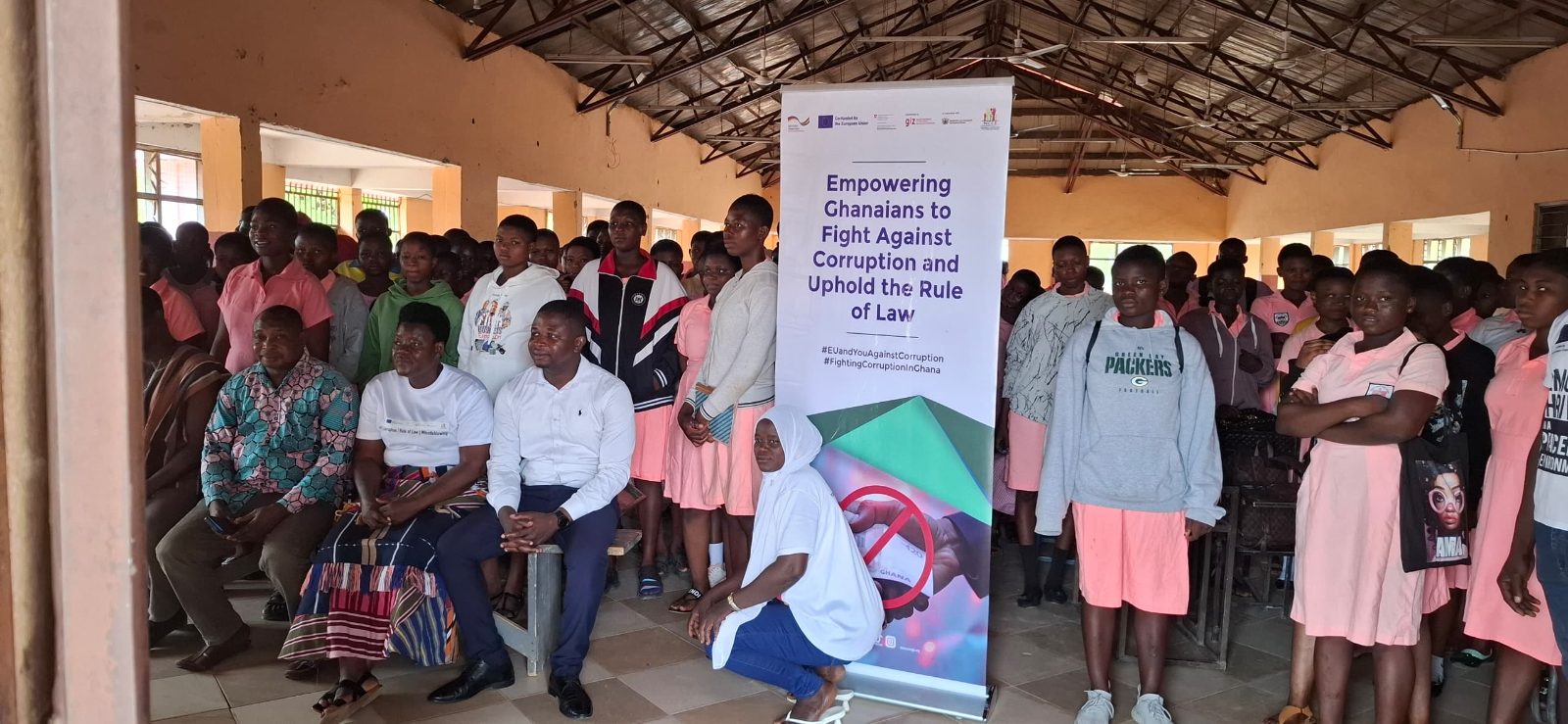
The Bongo District Office of the National Commission for Civic Education organised the civic engagement on 21st May 2026 for members of the school’s Civic Education Club. The programme sought to educate students on the importance of integrity, accountability, ethical conduct, and responsible citizenship in building a just and democratic society.
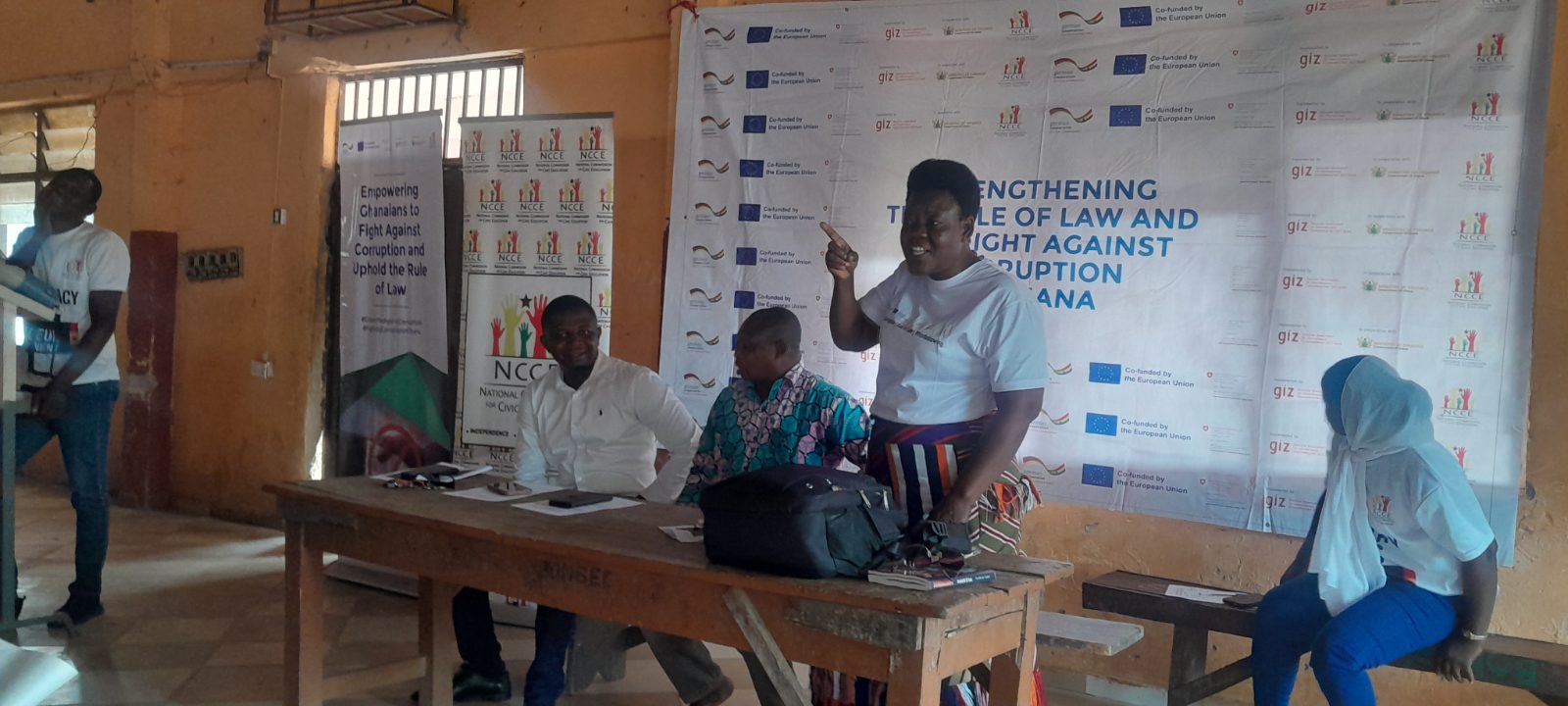
In her opening remarks, the Bongo District Director of the NCCE, Mrs. Alice Ndego, encouraged the students to be responsible citizens who respect the rule of law and contribute positively to national development. She urged them to uphold honesty and discipline in school and in their communities, stressing that young people have a key role to play in promoting a culture of accountability.
Mrs. Ndego also admonished the students to speak up against corruption and report suspected corrupt acts to the appropriate authorities and institutions, including CHRAJ, the Police, the NCCE, and school authorities for the necessary action. She noted that silence in the face of wrongdoing weakens institutions and allows indiscipline and corruption to grow.
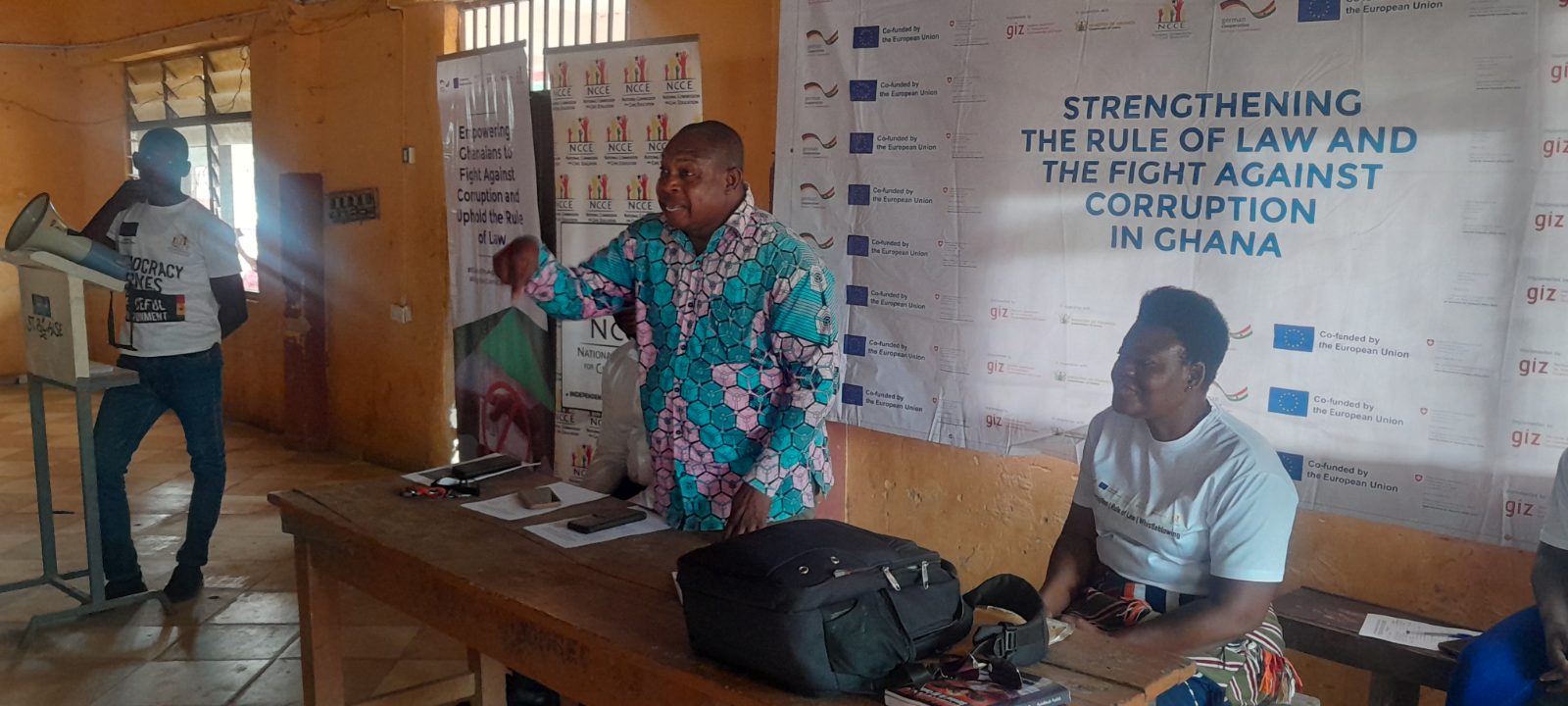
Mr. Prosper Atubiga, an investigator from the Commission on Human Rights and Administrative Justice, took the students through conflict of interest in public and institutional decision-making, influence peddling, abuse of office, rule of law, and ethical leadership standards.
Explaining conflict of interest, Mr. Atubiga said it occurs when a person’s private interests interfere, or appear to interfere, with official responsibilities, leading to unfair or biased decisions. He further explained that influence peddling and abuse of office involve the use of one’s position, authority, or connections to gain unfair advantage, obtain favours, or misuse resources.
According to him, such practices undermine public trust, weaken institutions, and hinder national progress. He used practical examples and scenarios to help the students understand how corruption can occur in schools, communities, workplaces, and public institutions.
On ethical leadership, Mr. Atubiga explained that good leadership must be guided by integrity, fairness, accountability, honesty, humility, and respect for others. He encouraged the students to practise these values in their roles as class leaders, club executives, prefects, and future leaders.
Touching on the rule of law, he reminded the students that every citizen, regardless of status, position, or background, is subject to the laws of the country. He urged them to demonstrate fairness, transparency, and responsibility in their daily activities.
The students actively participated in the discussion by asking questions, answering questions, and sharing views on corruption-related issues in the school and community. One student cited a scenario in which an SRC President was entrusted with dues for SRC Week celebrations but failed to account for the money, noting that such conduct showed why integrity is important in leadership.
The engagement ended with a call on students to serve as ambassadors of integrity, reject corrupt practices, promote good governance, and uphold discipline in their school and communities.

_
Follow us on our social media pages for more stories and posts from the NCCE.

https://www.instagram.com/nccegh/

https://www.facebook.com/nccegh/
Leave a comment