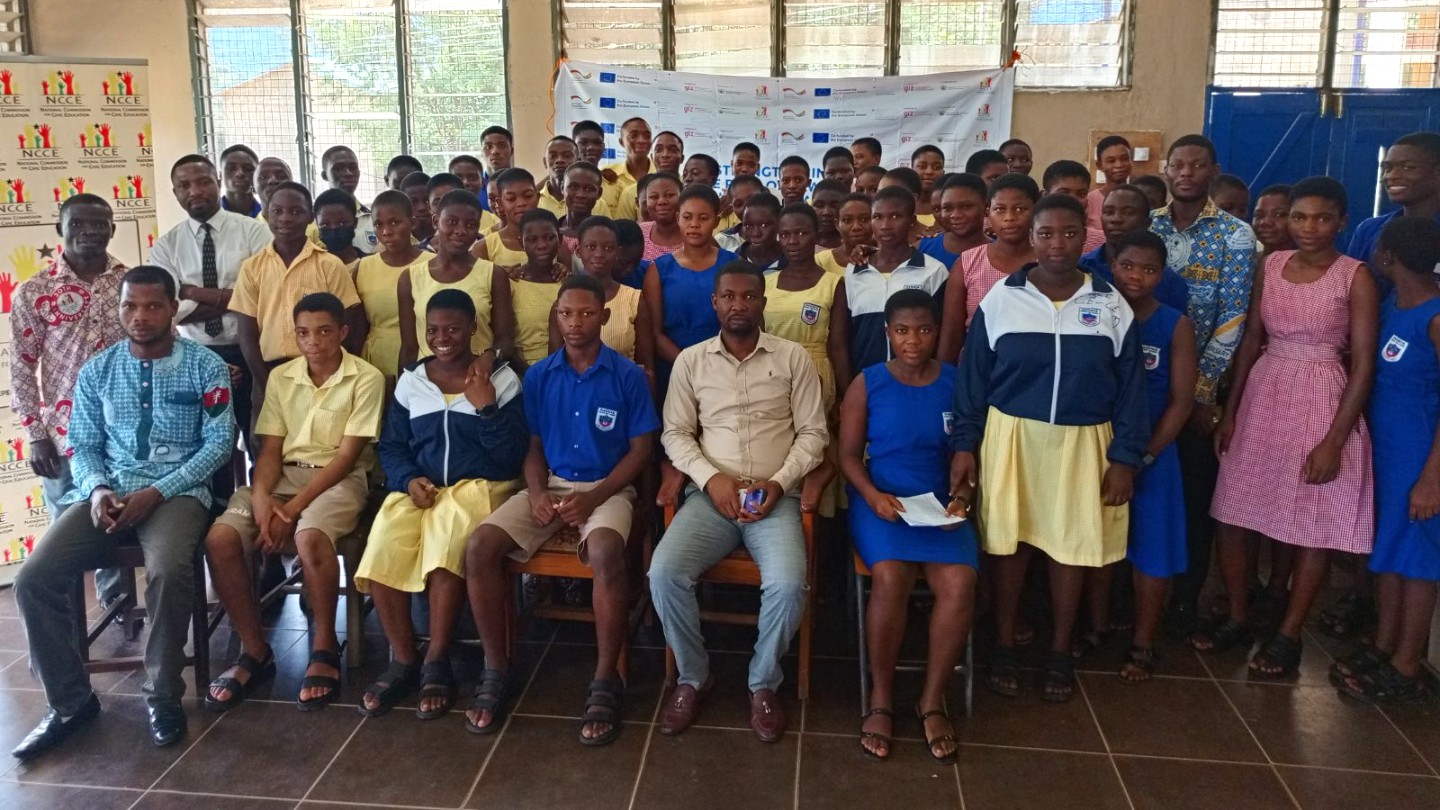
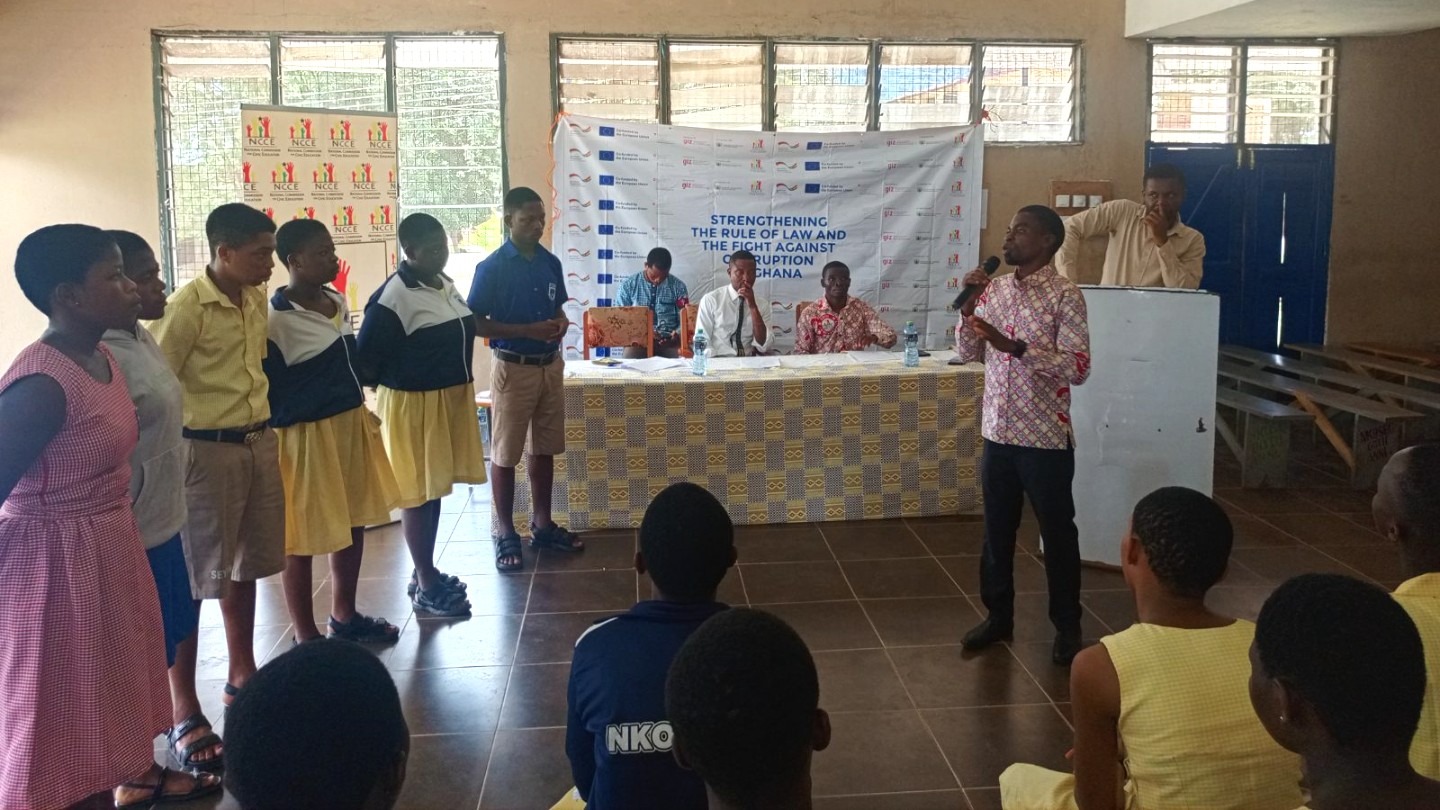
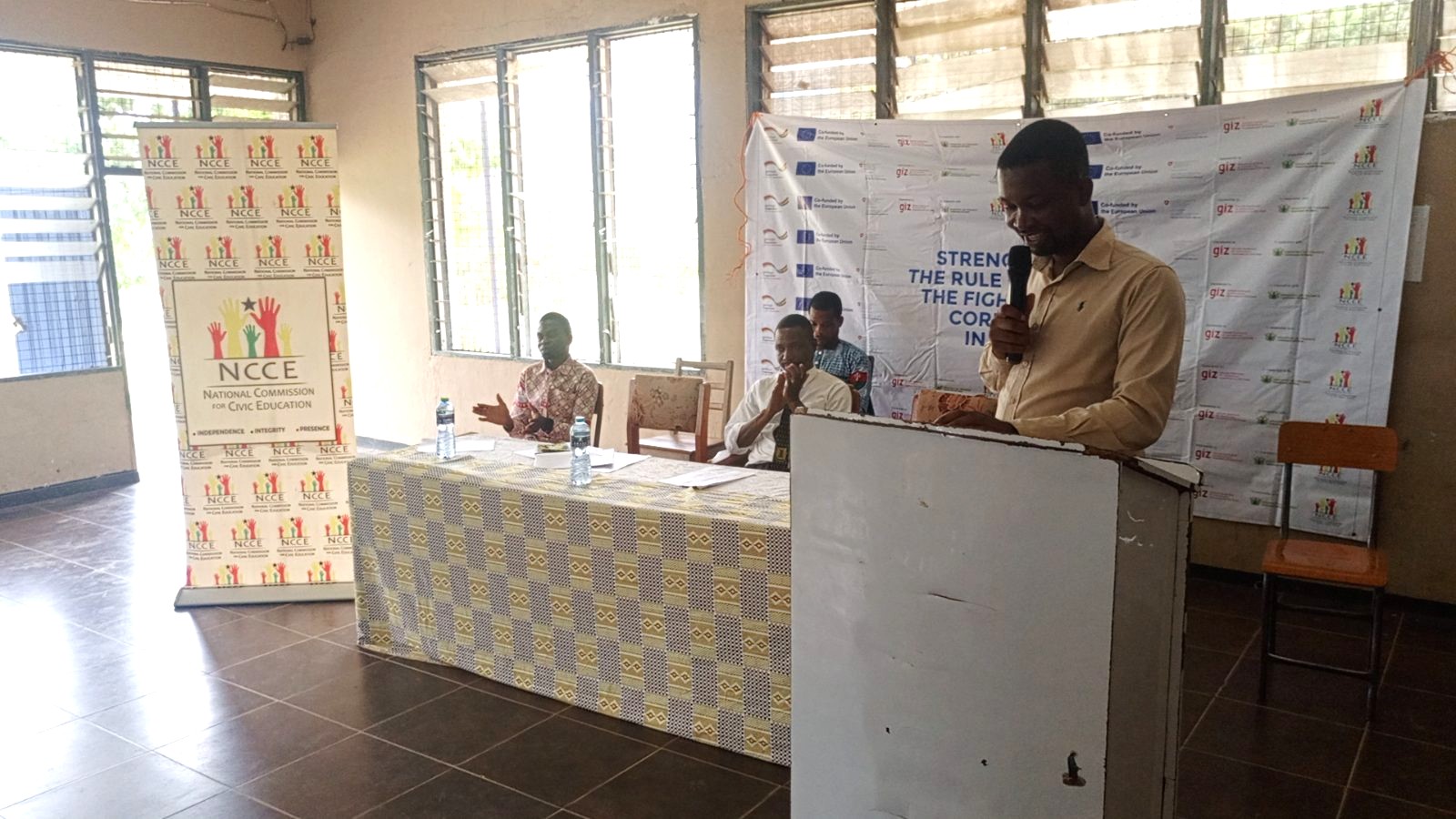
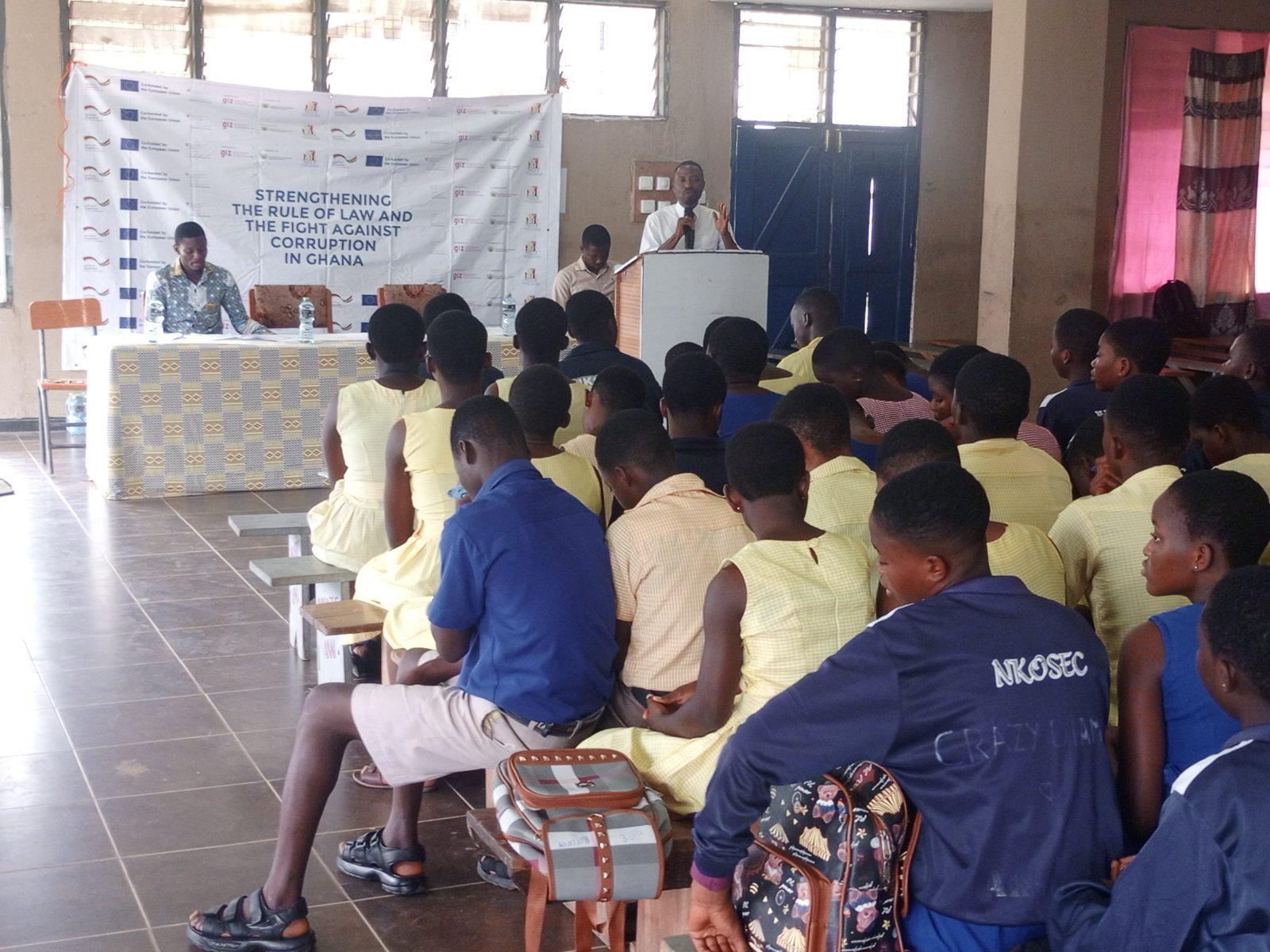
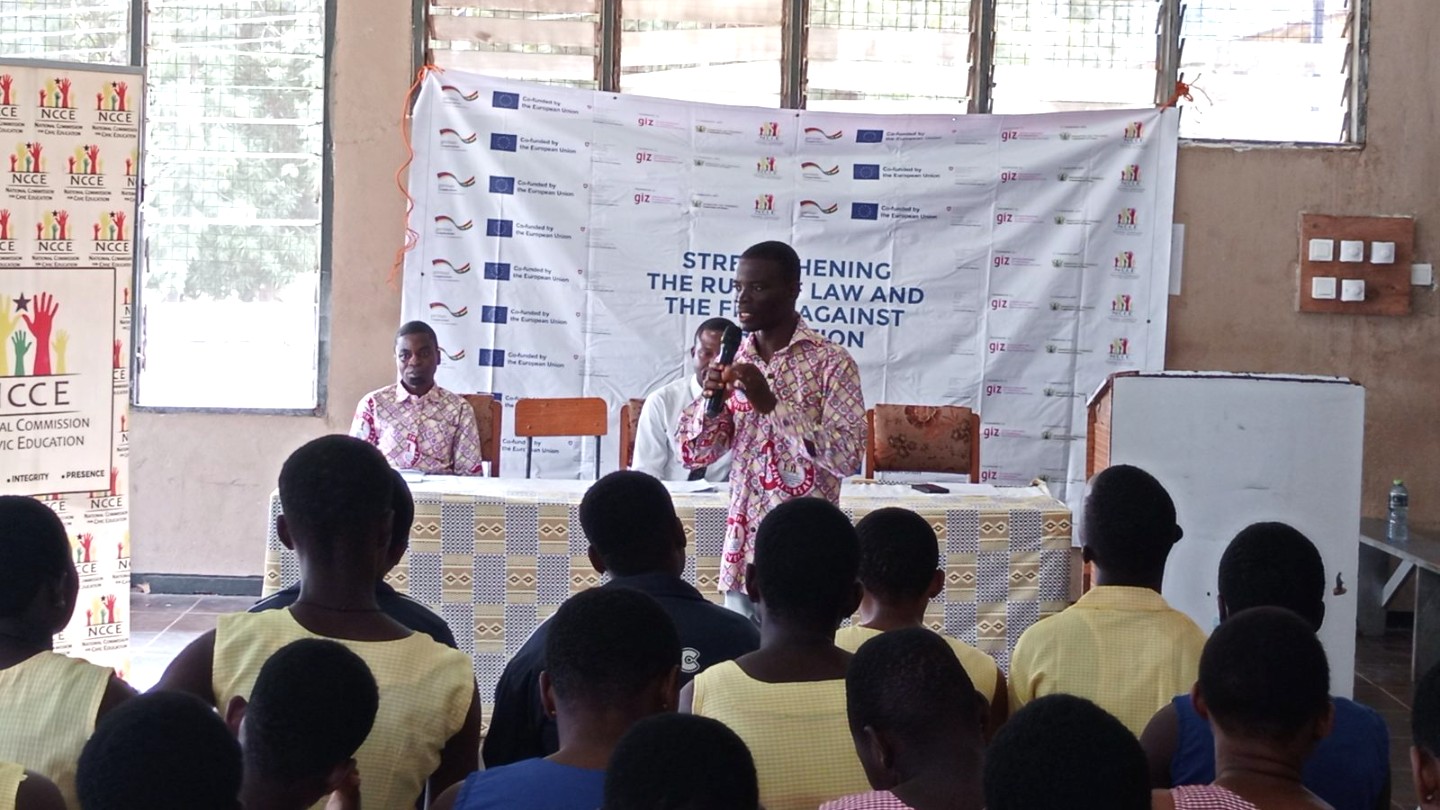
The Biakoye District Office of the National Commission for Civic Education has engaged members of the Civic Education Club of Nkonya Senior High School on ethical leadership, accountability, the rule of law, and the fight against corruption.
The programme was held on Wednesday, 20th May 2026, at the assembly hall of Nkonya Senior High School. It was organised by the NCCE with support from Deutsche Gesellschaft für Internationale Zusammenarbeit (GIZ) and the European Union, as part of efforts to deepen civic engagement and empower students to participate actively in governance and demand accountability from leaders.
Addressing the students, the Biakoye District Civic Education Officer, Mr. Ernest Mensah, explained that democratic governance thrives when citizens participate actively in national life through voting, public discourse, community involvement, and responsible civic action. He noted that the rule of law requires every person to be treated equally before the law, adding that obedience to the law helps maintain fairness, peace, and order in society.
Mr. Mensah also encouraged the students to embrace integrity, honesty, humility, discipline, and responsibility as essential values for ethical leadership. He urged them to cultivate these qualities early and apply them in their roles as students, club members, and future leaders.
Speaking on influence peddling and abuse of office, Mr. Mensah explained that influence peddling involves the use of personal connections or positions to gain unfair advantage, while abuse of office occurs when people misuse authority or public resources for personal benefit. He cautioned that such practices weaken institutions, reduce public trust, and undermine national progress.
The Biakoye District Director of the Commission on Human Rights and Administrative Justice, Mr. Larry Doe Klatsi, also educated the students on conflict of interest in public and institutional decision-making. He explained that conflict of interest occurs when a person in authority has personal interests that may affect his or her ability to make fair and honest decisions.
Citing examples, Mr. Klatsi noted that a student leader favouring friends in school decisions, a teacher awarding marks unfairly to a relative, or a person giving opportunities to friends instead of qualified individuals could all amount to unfair conduct. He stressed that conflict of interest undermines fairness, creates mistrust, and slows institutional development.
The Patron of the Civic Education Club, Mr. Liberty Mensah, encouraged the executives and members of the Club to remain committed to ethical values and work together to make a positive impact in the school and beyond.
Concluding the session, Mr. Ernest Mensah urged the students to reject corruption, uphold ethical leadership, and promote justice in all their endeavours. He called on club members to serve as ambassadors of discipline, integrity, and responsible citizenship through their character and actions within the school and the wider community.
_
Follow us on our social media pages for more stories and posts from the NCCE.

https://www.instagram.com/nccegh/

https://www.facebook.com/nccegh/
Leave a comment