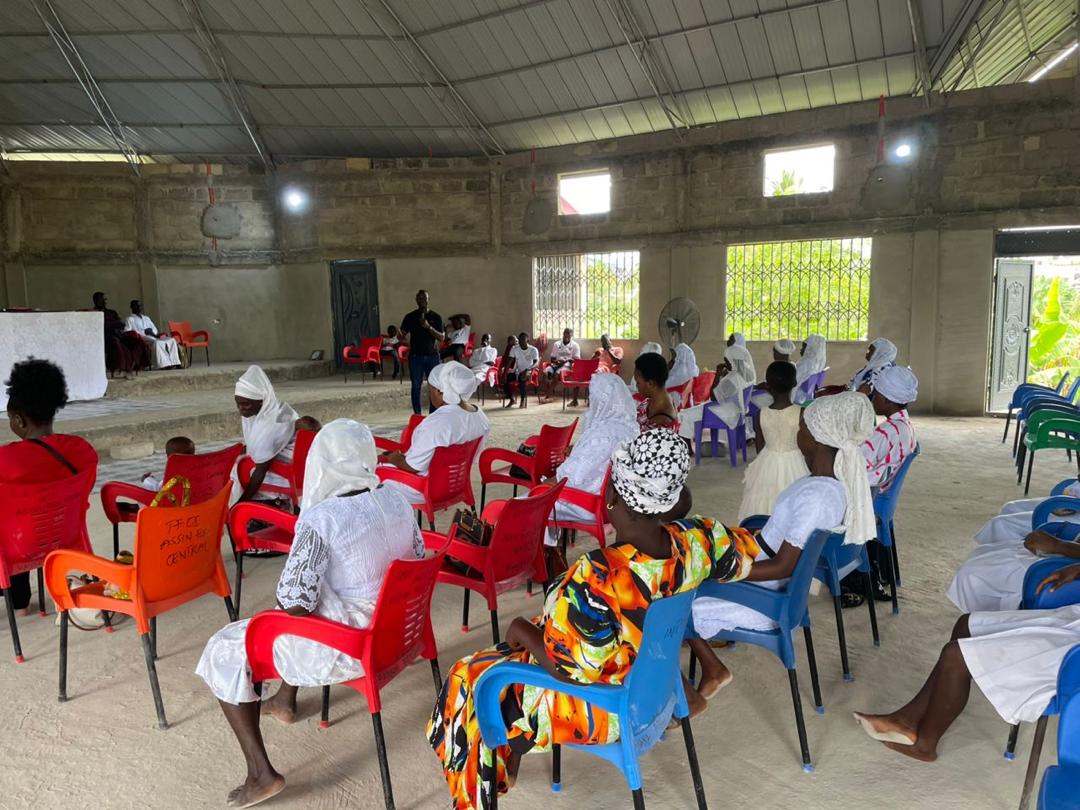
The Assin Foso Office of the National Commission for Civic Education, in collaboration with the Ghana Health Service, has educated members of the Assin Foso Reform Artisans Association on adolescent reproductive health, responsible digital behaviour, and constitutional responsibilities.
The engagement, held on 12th May 2026, was organised under the theme, “Upholding Our Constitution in a Digital Age: Our Collective Responsibility.” It sought to equip members of the Association with relevant information to help them make informed decisions about their health, personal safety, and civic conduct in both physical and digital spaces.
Speaking at the meeting, Madam Isabella Koantwi of the Ghana Health Service educated participants on reproductive health and the dangers associated with teenage pregnancy. She also spoke on sexually transmitted infections, including HIV, and advised participants to take their sexual and reproductive health seriously.
Madam Koantwi explained that family planning is one of the ways of preventing unwanted pregnancies and encouraged participants to seek proper guidance in choosing suitable methods. She highlighted the use of condoms and advised unmarried persons to consider abstinence as a safe option. She further took members through various family planning methods to help them understand the available choices.
Mr. Michael Sagoe of the NCCE also educated members of the Association on their rights and responsibilities under the 1992 Constitution, particularly in relation to their health, personal dignity, and safety. Supported by Mr. Amoah Bismak and Madam Theresa Avoka, also of the NCCE, he advised participants to use smartphones and digital platforms responsibly.
Mr. Sagoe cautioned against sharing false or misleading information online, stressing that such conduct could misinform the public and undermine social harmony. He also advised participants against sharing intimate images on social media or sending such images to anyone who requests them, noting that such actions could expose them to abuse, blackmail, embarrassment, and other harmful consequences.
He further explained that the Constitution guarantees the protection of young persons from harmful practices, as provided under Article 28. He reminded participants that online behaviour is also guided by law and civic responsibility, and that the use of a phone or digital platform does not give anyone the freedom to post, share, or circulate harmful content.
The President of the Reform Artisans Association, Mr. Amos Kumi, expressed appreciation to the NCCE and the Ghana Health Service for the education. He described the engagement as important and useful to members of the Association.
_
Follow us on our social media pages for more stories and posts from the NCCE.

https://www.instagram.com/nccegh/

https://www.facebook.com/nccegh/
Leave a comment